

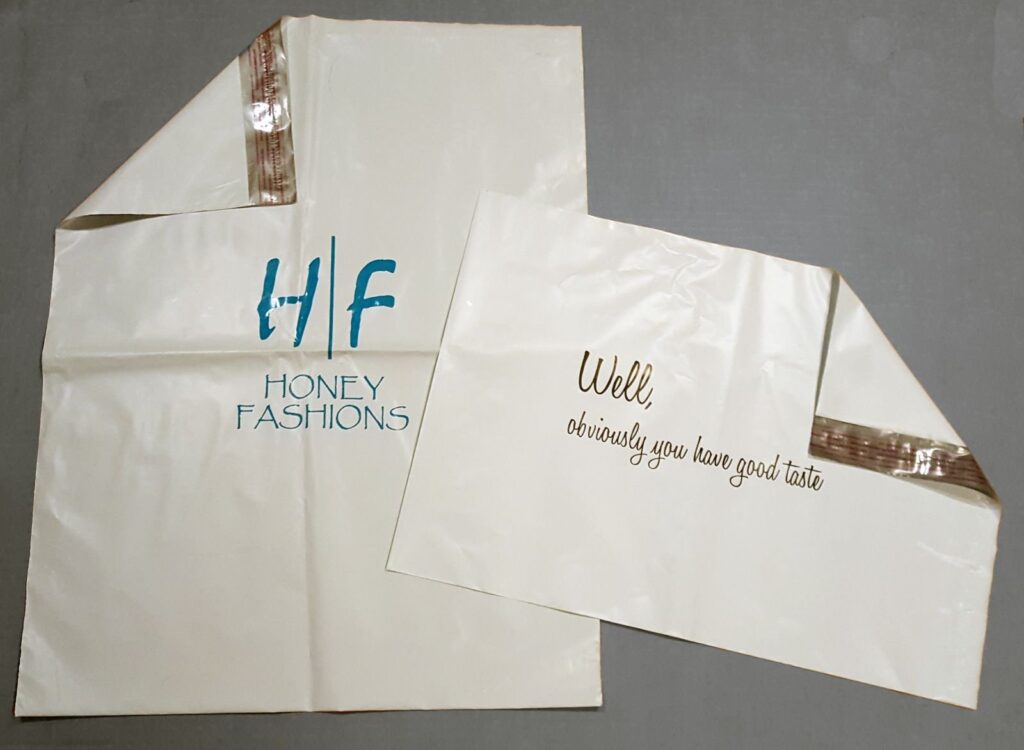
For a fashion label that ships online, the mailer is the first thing a customer actually touches. Before they see the garment, before they feel the fabric, they hold your packaging on their doorstep. A plain gray poly bag says one thing about your brand. A matte mailer with your logo in foil says something else entirely.
That first impression is why so many clothing brands treat custom mailing bags as part of the product, not an afterthought. This guide covers everything a fashion business needs to get them right: which type fits your clothing, how to size a mailer for any garment, how to design one that feels like your brand, the sustainable options that matter in fashion, and what it all costs, including the low minimum orders that make custom packaging realistic for small labels.

Why Mailing Bags Matter for Fashion Brands
Clothing has a rare advantage in shipping. It’s soft, it bends, and it doesn’t break. That means most apparel doesn’t need a rigid box at all, which opens the door to mailers that are cheaper to buy, lighter to ship, and faster to pack. For a growing e-commerce brand sending dozens or hundreds of orders a week, that adds up quickly.
But the real value for fashion is branding. A mailer is a flat, printable surface that travels through the mail, past sorting facilities, and into a customer’s hands. Every one of those orders is a chance to reinforce who you are. A well-designed mailer turns a routine delivery into a moment worth photographing and posting, which is free marketing from the people you most want to keep. If you’re building a full apparel setup, our packaging for clothing brands hub pulls the pieces together.
What Types of Mailing Bags Work Best for Clothing?
“Mailing bag” covers a whole family of options, and the right one depends on your product, your budget, and your brand values. Here’s how the five main types compare for apparel.
| Type | Material | Best For | Sustainability | Relative Cost |
| Poly mailers | Polyethylene film | T-shirts, knitwear, most soft apparel | Recyclable via store drop-off; recycled-content options | Lowest |
| Paper mailers | Kraft or coated paper | Premium, plastic-free apparel brands | Curbside recyclable | Low to mid |
| Compostable mailers | Plant-based compostable film | Sustainability-led labels | Certified compostable | Mid |
| Paper padded mailers | Paper with paper padding | Delicate knits, embellished pieces | Curbside recyclable | Mid to high |
| Bubble mailers | Poly with bubble lining | Accessories, hardware, anything with fragile trims | Recyclable via drop-off | Mid to high |
For the majority of clothing brands, a poly mailer is the workhorse. It’s the cheapest, lightest, and most print-friendly option, and it handles folded tees, leggings, and most soft goods without issue. Brands that have made a plastic-free promise usually reach for paper mailers or compostable mailers instead, trading a little cost for a cleaner story and a premium feel. If a piece has beading, sequins, or delicate hardware that could snag or dent, a paper padded mailer or bubble mailer adds cushioning without jumping all the way up to a box.
What Size Mailing Bag Do You Need?
Sizing is where a lot of new brands overspend or, worse, cram a garment into a bag that splits at the seam. Too big, and you pay for wasted space and dimensional weight. Too small, and the mailer bulges and looks cheap. The goal is a snug fit with a little room to seal.
Use this as a starting point for common apparel, then adjust for how your pieces fold.
| Mailer Size (approx.) | Fits |
| 6″ x 9″ | Jewelry, socks, underwear, small accessories, fabric swatches |
| 9″ x 12″ | One folded t-shirt, leggings, a light top |
| 10″ x 13″ | One to two tees, a folded dress, a light dress shirt |
| 12″ x 15″ | Hoodies, sweaters, thicker knitwear, two to three tees |
| 14.5″ x 19″ | Jeans, outerwear, bulky knits, multi-item orders |
| 19″ x 24″ | Coats, blankets, large multi-piece orders |
Two tips that save money. First, measure your most common garment folded, then add a couple of inches on each side so packing stays fast and the seal holds. Second, if you’re deciding between a mailer and a box for heavier items, remember that a flat mailer keeps your shipping weight down, since carriers bill on size as well as weight. Our guide on poly mailers vs. boxes breaks down exactly when each one is cheaper. When you’re not sure which size is right, order samples before committing to a full run.
How to Design Mailing Bags That Feel Like Your Brand
This is where “style starts with the packaging” stops being a slogan and becomes a set of choices. A branded mailer doesn’t need to be complicated to look expensive. It needs to be consistent and intentional.
A few levers that shape how the packaging reads:
- Color and finish. A matte finish reads as premium and modern, while gloss feels bold and energetic. A signature brand color on the outside of the bag makes your deliveries recognizable before anyone reads a word. One of our fashion clients ships in a matte white mailer with a gold-foil phrase, which is a simple combination that looks far more considered than its cost.
- Logo placement. Center it, tile it as a subtle repeating pattern, or run it along the seal. Full-surface printing lets you use the whole bag, front and back.
- The inside moment. Printing on the interior of the mailer, or slipping in a sheet of branded tissue paper, turns the act of opening into a small reveal. For apparel especially, that unboxing beat is what gets shared.
- Finishing touches. Custom printed tape, a hang tag, or a printed label tie the look together for pennies per order.
The brands that photograph best treat the mailer, the tissue, and the tags as one coordinated system rather than separate purchases. A prebuilt custom kit bundles those elements so everything matches. If you want to see your design before you print, a free digital mockup shows exactly how the finished mailer will look.
Sustainable Mailing Bags for Fashion
Sustainability has moved from a nice-to-have to a real purchasing factor in apparel, and shoppers increasingly notice, and reward, brands whose packaging matches their values. Fashion also carries a specific plastic problem worth understanding: garments are often bagged individually in clear virgin-plastic poly bags at the factory, long before your branded mailer ever enters the picture. A growing number of labels are tackling that hidden layer as part of a broader shift to lower-impact packaging.
For the mailer itself, you have several greener paths:
- Recycled-content poly mailers keep the cost and weight benefits of poly while cutting virgin plastic.
- Paper mailers and paper padded mailers recycle curbside in most areas, which makes them easy for customers to dispose of responsibly.
- Compostable mailers break down where composting is available, closing the loop for brands that want a clear end-of-life story.
Choosing a sustainable option is also a positioning move. It gives you something honest to say on your product pages and packaging inserts, and it signals care to a customer base that increasingly expects it. Our eco-friendly packaging range shows the full set of options, and our sustainability consulting team can help you pick the lowest-impact choice that still fits your budget and protects the garment.
How Much Do Custom Mailing Bags Cost?
Pricing depends on the type, size, print, and how many you order. Here are directional ranges for custom printed mailers so you can budget with a realistic number. For a full breakdown by format and volume, see our packaging cost guide.
| Type | Low Volume (500 to 1,000) | High Volume (10,000+) |
| Poly mailers | $0.25 to $0.55 | $0.08 to $0.25 |
| Paper mailers | $0.35 to $0.75 | $0.15 to $0.35 |
| Compostable mailers | $0.45 to $0.95 | $0.20 to $0.45 |
| Bubble mailers | $0.55 to $1.20 | $0.30 to $0.65 |
| Paper padded mailers | $0.60 to $1.30 | $0.30 to $0.70 |
The big driver is order size. Setup costs like printing plates are the same whether you order a few hundred or several thousand, so your per-bag price drops sharply as your volume grows. If you’re trying to bring the number down without cutting quality, our cost reduction team can look at your specs and find the savings.
Custom Mailing Bags for Small Fashion Businesses and Startups
Here’s the part that trips up a lot of new labels: many suppliers won’t print a small run, which forces startups to either overbuy or ship in plain bags. We do things differently. Custom printed mailers are available with minimum orders as low as 150 pieces, so a brand testing its first drop can get properly branded packaging without committing to thousands of units or blowing the budget.
That low minimum is how small brands get the same quality and attention as large-scale clients. Two of the fashion businesses we’ve worked with are a good example. Honey Fashions Boutique in Saint Andrew, Jamaica wanted a matte white mailer with an ocean-turquoise logo to match their spa-set shop, and Hailee Grace in Denver, Colorado went with a matte white bag and a confident gold-foil phrase that mirrored their brand voice. Both stayed within a startup budget while getting packaging that looked anything but entry-level.
If that’s where you are, the fastest way to start is a free digital mockup of your design, then a small first run to see how it lands with customers. When you’re ready, request a quote and our team will help you match the right type, size, and finish to your brand.
Common Questions About Fashion Mailing Bags
What are custom mailing bags for clothing made of? Most are polyethylene film (poly mailers), which is lightweight, water-resistant, and prints well. Paper-based and compostable options exist too: paper mailers, paper padded mailers, and compostable mailers for brands prioritizing sustainability.
What size mailing bag do I need for a t-shirt? A single folded t-shirt fits comfortably in a 9″ x 12″ or 10″ x 13″ mailer. For a hoodie or thicker knitwear, size up to around 12″ x 15″. Always leave a little room to seal, and order samples if you’re unsure.
Are custom mailing bags eco-friendly? They can be. Paper mailers and paper padded mailers recycle curbside, compostable mailers break down where composting is available, and recycled-content poly reduces virgin plastic. See our eco-friendly packaging options.
What’s the minimum order for custom printed mailing bags? At Plus Packaging, custom printed mailers start at as few as 150 pieces, which makes branded packaging realistic for small labels and first product drops.
Should a clothing brand use a mailer or a box? For soft, non-fragile apparel, a mailer is almost always cheaper to buy and ship. Boxes make sense for fragile items, heavier multi-piece orders, or when a premium unboxing experience is central to the brand. Our poly mailers vs. boxes guide covers the trade-offs.
How do I design a branded mailer? Start with a signature color and finish (matte or gloss), add your logo, and coordinate the mailer with tissue paper, tape, and hang tags so everything matches. A free digital mockup lets you preview it before printing.
How long do custom mailing bags take to produce? Turnaround depends on the type, quantity, and design complexity. Share your details and our team will give you a timeline that fits your launch date.
The Bottom Line
For a fashion brand, custom mailing bags are one of the highest-return upgrades you can make. They cost less than boxes, ship lighter, and turn every delivery into a branded moment your customers want to share. Pick the type that fits your garments and your values, size it snugly, design it to match your brand, and don’t let a supplier’s high minimums stop you from starting small.
Plus Packaging helps fashion brands of every size get this right, from a startup’s first 150 mailers to a scaling label’s full branded system. Browse custom poly mailing bags, explore packaging for clothing brands, or get a quote to start designing yours.