

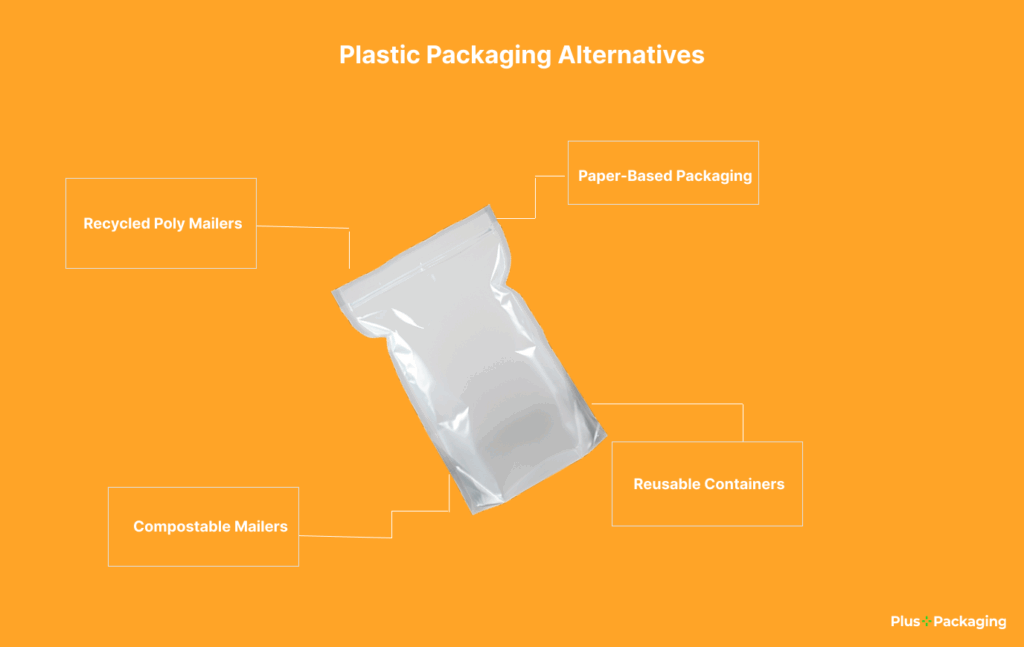
The best alternatives to plastic packaging are paper and paperboard, molded pulp, recycled and compostable films, glass, metal, and emerging plant-based materials like mushroom and seaweed, each with different trade-offs in cost, protection, and recyclability. For most small and mid-sized businesses shipping products, the practical switch starts with recycled or compostable mailers and paper-based void fill, then expands from there.
Plastic mailers became the default for good reason: they’re cheap, lightweight, and protective. But as customers push for greener options and regulations tighten, moving away from conventional plastic is becoming good for business, not just the planet. The good news is the gap between “sustainable” and “affordable, practical” is closing fast. Below we break down the realistic options by material and by use case with honest talk about cost, performance, and what each works best for.
Why More Businesses Are Moving Beyond Traditional Plastic
A few forces are driving the shift, and understanding them helps you prioritize:
- Customers will pay for it. The majority of consumers say they’re willing to pay more for sustainable packaging, and younger buyers in particular weigh your packaging when deciding whether to buy again.
- The plastic problem is real. Only about 9% of all plastic ever made has been recycled; the rest sits in landfills, oceans, or breaks down into microplastics. By the Ellen MacArthur Foundation’s estimate, just ~14% of plastic packaging is even collected for recycling.
- Regulations are tightening. The EU restricted many single-use plastics starting in 2021, and hundreds of U.S. municipalities now have bans or taxes. Getting ahead of these rules avoids scrambling later.
- Brand image is packaging. In a crowded market, your packaging is a physical statement of your values and a sustainable choice tells customers you care about more than margin.
- Lightweighting can cut shipping costs. The right alternative protects products while trimming dimensional weight.
A Quick Guide to Plastic-Alternative Materials
Before the format (mailer, box, void fill), it helps to know the raw materials replacing plastic and their honest pros and cons.
1. Paper & Paperboard
Kraft mailers, corrugated boxes, and folding cartons are the workhorses of plastic replacement: renewable, widely recyclable, and easy to print or stamp. Paper’s recycling rate (~68%) dwarfs plastic’s, and most customers already know how to recycle it. The trade-offs are weight (heavier than film, which can raise shipping costs) and limited waterproofing without a barrier coating. Best for: boxes, mailers, void fill, retail bags, and most dry or non-fragile goods.
2. Molded Pulp & Bagasse
Molded fiber, made from recycled paper or agricultural waste like sugarcane bagasse — replaces foam and plastic trays, inserts, and clamshells. It’s recyclable, compostable, and protective. Molded pulp packaging is a clean, modern way to cushion fragile items without expanded polystyrene. Best for: protective inserts, electronics trays, cosmetics, and produce.
3. Glass
Highly recyclable, reusable, non-toxic, and great for product visibility, glass is enjoying a resurgence in beverages, beauty, and food. The downsides are real, though: it’s heavy (higher transport emissions and cost) and fragile, so it needs protective secondary packaging. Best for: premium primary packaging where reuse and visibility matter.
4. Metal & Aluminum
Aluminum and steel are infinitely recyclable and durable, which is why beverages, cosmetics, and personal-care brands use them as primary packaging. Watch for weight (raises shipping cost versus fiber) and, for some products, corrosion risk. Best for: refillable primary containers and beverage packaging.
5. Bamboo & Plant Fibers
Bamboo is fast-growing and renewable, producing packaging similar to wood fiber. But most bamboo is grown in Asia, so importing adds cost and supply-chain risk, and the fiber often needs modification to match plastic’s strength. Best for:rigid containers, lids, and brands leaning into a natural aesthetic.
6. Mushroom (Mycelium) Packaging
Grown from mycelium and agricultural waste, mushroom packaging is molded into protective shapes, then home-compostable at end of life — a genuine foam replacement. It’s still more expensive and less widely available, and it suits protective rather than waterproof applications. Best for: protective inserts and cushioning for fragile or premium goods.
7. Seaweed & Algae
One of the newest categories, seaweed-based films and coatings are biodegradable and even edible in some forms. The technology is early-stage and best-suited to food and single-serve applications today, but it’s a space worth watching. Best for: food wraps, sachets, and innovation-forward brands.
8. Bioplastics (PLA & PHA)
Plant-derived bioplastics (often from corn or sugarcane) look and feel like plastic, which is why adoption is rising fast. But “bio-based” doesn’t automatically mean “compostable at home”, most require industrial composting to break down properly, and in a landfill or backyard bin they can persist for years. Treat them as a tool, not a cure-all, and pair them with clear disposal messaging. Best for: compostable films and liners where industrial composting access exists.
Beyond materials, the biggest wins often come from the formats you ship every day. Here are the practical swaps.
Practical Plastic Alternatives for Shipping & Ecommerce
9. Recycled Poly Mailers
Made from post-consumer film (think recovered shopping bags), recycled poly mailers look and perform like virgin plastic, same waterproofing, tear resistance, and self-seal strip while reducing demand for new plastic. They typically run 5–15% more than virgin mailers (roughly $0.20–$0.35 for a standard 10×13″ at moderate volume). For brands not ready to leave film entirely, switching to recycled custom poly mailers is the easiest first step toward a lower-impact shipment, and they’re still fully printable with your branding. Best for: apparel, accessories, and soft goods exposed to moisture in transit.
10. Compostable Mailers
Usually a blend of PLA and PBAT, compostable mailers break down in industrial composting facilities (typically within 180 days) and can be printed in vibrant, full color. They’re slightly less stretchy and water-resistant rather than fully waterproof, and they cost roughly 20–40% more than standard poly ($0.30–$0.50 for a 10×13″). The environmental benefit depends on customers actually composting them, so disposal messaging matters. Explore compostable mailers for eco-forward, higher-margin lines. Best for: strongly eco-conscious audiences and items that don’t need maximum water protection.
11. Paper & Kraft Mailers
Flat kraft paper mailers are often price-comparable to standard poly, while padded paper mailers (with recycled paper-fiber cushioning) run about 10–30% more ($0.25–$0.45 for a 10×13″). They carry a natural, artisanal look, recycle curbside almost everywhere, and biodegrade even in landfill conditions. Best for: books, prints, flat items, and semi-fragile goods that don’t need waterproofing.
Bonus swaps that cut the most plastic
Paper void fill instead of bubble wrap and air pillows. Honeycomb paper wrap, crinkle paper, and corrugated inserts cushion products without plastic film — and pair naturally with custom shipping boxes.
Paper tape instead of plastic tape. Kraft paper tape (water-activated or self-adhesive) seals boxes and recycles right along with the carton, unlike plastic packing tape.
Right-sized boxes instead of oversized plastic. A snug mailer box reduces both void fill and dimensional-weight charges.
Plastic Alternatives Compared at a Glance
| Material / format | Relative cost | Weight | Protection | End-of-life | Best for |
| Kraft / paper mailer | $ (comparable to poly) | Light–medium | Low–medium | Curbside recycle + biodegradable | Books, flat & dry goods |
| Padded paper mailer | $$ (+10–30%) | Medium | Medium | Curbside recycle | Semi-fragile items |
| Recycled poly mailer | $$ (+5–15%) | Light | Medium (waterproof) | Store drop-off film recycle | Apparel, moisture-prone goods |
| Compostable mailer | $$$ (+20–40%) | Light | Medium (water-resistant) | Industrial compost | Eco-forward, higher-margin lines |
| Molded pulp / bagasse | $$ | Light–medium | Medium–high | Recycle + compost | Inserts, electronics, produce |
| Corrugated box | $$ | Medium | High | Curbside recycle | Fragile & structured items |
| Glass | $$$ | Heavy | Medium (fragile) | Highly recyclable, reusable | Premium primary packaging |
| Metal / aluminum | $$$ | Medium–heavy | High | Infinitely recyclable | Refillable primary packaging |
| Bamboo / plant fiber | $$$ | Light–medium | Medium | Compostable | Rigid containers, natural brands |
| Mushroom (mycelium) | $$$ | Light | Medium–high | Home compostable | Protective cushioning |
| Bioplastic (PLA/PHA) | Light | Medium | Industrial compost only | Compostable films/liners |
Cost ranges are general industry estimates and vary by supplier, quantity, size, and customization. Request a quote for exact pricing, or see our packaging cost guide for what drives the number.
How to Choose the Right Alternative for Your Business
Picking the right option isn’t only about being green, it has to work for your products, budget, and operations.
Product protection factors
- Weight of your items: heavier products may need corrugated boxes rather than simple mailers.
- Fragility: electronics and ceramics need cushioning, padded paper mailers, molded pulp inserts, or boxes with inserts.
- Moisture sensitivity: if water can ruin the product, recycled poly protects better than paper or some compostables.
- Product shape: irregular items may need boxes or more flexible mailers.
- Shipping distance: longer routes through multiple climates demand more durable packaging.
Cost beyond purchase price
- Storage space: bulkier options like corrugated take more warehouse room.
- Shipping weight: paper is heavier than film and can raise shipping costs 5–15%.
- Volume leverage: larger orders sharply lower per-unit cost on many sustainable options.
- Damage rates: better protection can save more on replacements and support than it costs.
- Customer lifetime value: if greener packaging lifts repeat purchases, it can pay for itself.
Brand-alignment questions
- What do your customers value most — visible sustainability, minimal packaging, or a premium unboxing?
- How does the cost fit your price point? Premium products absorb premium packaging more easily.
- What story does the material tell? Kraft reads artisanal; compostable film signals innovation.
- How will you communicate the choice? The impact lands when customers understand why you chose it.
Not sure how to weigh these? Our sustainability consulting and packaging engineering teams help match materials to your products, margins, and shipping conditions.
Plus Packaging’s Sustainable Options
We’ve developed alternatives that balance performance, sustainability, and cost, all part of our broader eco-friendly packaging range:
- Recycled poly mailers: at least 30% post-consumer waste, multiple sizes and colors, fully customizable with your branding.
- Compostable mailers: plant-based and certified by TUV Austria with the OK-Compost mark for industrial composting.
- Kraft paper mailers: plain or padded, made from recycled content, printed with water-based inks.
- Molded pulp and paper void fill: foam-free cushioning for fragile and premium goods.
These work across ecommerce, apparel and fashion, and food service brands looking to cut plastic.
Making the Switch Without the Headaches
Switching to eco-friendly packaging is great — how you roll it out matters too.
Right-size first
A mailer that’s too big wastes material and raises shipping costs. Analyze your typical shipments and stock the 2–3 most common sizes rather than one-size-fits-all.
Tell customers how to dispose of it
Print clear instructions like “Recyclable with film plastics at grocery drop-offs” or “Compostable in industrial facilities.” On-pack messaging works best, but package inserts and QR codes linking to recycling details help too.
Phase it in
- Test one product line first to gauge response and iron out logistics.
- Use up existing stock before switching to avoid waste.
- Start with bestsellers, where a better unboxing has the biggest impact.
- Time the change with a launch or rebrand for marketing lift.
Measure the impact
Track packaging comments in reviews and social, compare damage rates before and after, estimate the waste reduction, and survey customers on brand perception.
Frequently Asked Questions
What is the best alternative to plastic packaging?
There’s no single best option, it depends on the product. Paper and paperboard suit most dry goods, molded pulp replaces foam for fragile items, recycled or compostable mailers cover ecommerce shipping, and glass or metal work for premium primary packaging. Match the material to your protection, budget, and disposal needs.
What is the most eco-friendly packaging material?
Recycled and recyclable paper/paperboard generally has the lowest impact for most uses because it’s renewable, widely recycled (~68%), and biodegradable. Molded pulp and home-compostable materials like mushroom packaging are strong choices for cushioning.
Are compostable mailers better than recycled poly mailers?
It depends on your customers’ access to composting. Compostable mailers only deliver their benefit in industrial composting facilities; recycled poly reduces new-plastic demand and is more waterproof. For waterproofing and broad practicality, recycled poly often wins; for eco-forward audiences who will compost, compostable mailers shine.
Is paper packaging really better than plastic?
In most cases yes, paper is renewable, recycles at a far higher rate than plastic, and biodegrades. The trade-offs are weight (higher shipping cost) and the need for coatings to resist moisture.
What can I use instead of bubble wrap?
Honeycomb paper wrap, crinkle paper, corrugated inserts, and molded pulp all cushion products without plastic film and recycle with the rest of the box.
Are bioplastics actually sustainable?
Only conditionally. Most bioplastics need industrial composting to break down and can persist in landfills or home compost for years. They help when paired with composting access and clear disposal instructions, otherwise the benefit is limited.
How much more does sustainable packaging cost?
Often less than expected. Recycled poly runs about 5–15% more than virgin, padded paper mailers 10–30% more, and compostable mailers 20–40% more, and the gaps shrink at higher volumes.
What’s the easiest first switch for a small business?
Move to recycled poly or kraft mailers and swap plastic void fill for paper. These are low-cost, low-disruption changes that customers notice immediately.