

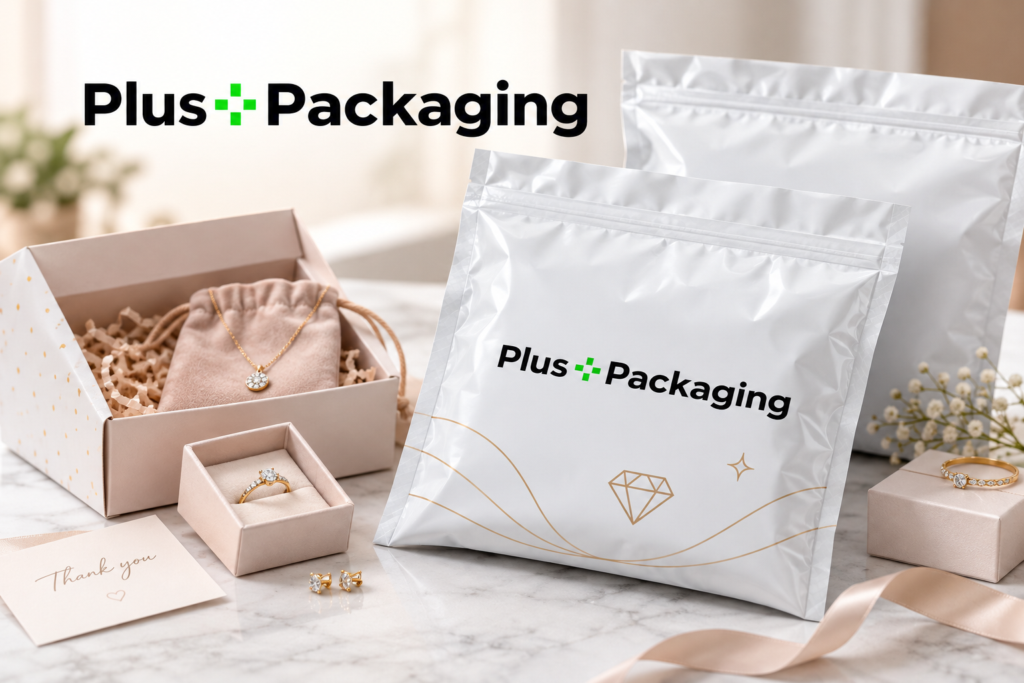
Jewelry packaging has two jobs that pull in different directions. It has to feel special, because customers often buy jewelry as a gift or a treat for themselves. It also has to protect small, delicate pieces that tangle, scratch, and tarnish, and survive a trip through the mail. Brands that get both right earn repeat buyers and unboxing photos. Brands that get one wrong end up with either a lovely box that arrives crushed or a safe package that feels like an afterthought.
This guide covers the layers of jewelry packaging, common types and materials, ideas by price point, sustainability, and how to choose shipping packaging for online orders.
The Two Layers of Jewelry Packaging
| Layer | What it is | Examples | Main job |
|---|---|---|---|
| Presentation (inner) packaging | What the customer opens to find the piece | Gift boxes, pouches, ring boxes, earring cards, tissue, inserts | Protect the piece and create the unboxing moment |
| Shipping (outer) packaging | What carries the order to the customer | Mailers, shipping boxes, void fill | Protect during transit and keep the contents discreet |
The inner layer sells the piece. The outer layer gets it there. Thinking about them separately makes it easier to choose the right materials for each.
Common Types of Jewelry Packaging
- Gift boxes. Rigid boxes, drawer boxes, and two-piece lid boxes with foam or velvet inserts. The classic choice for rings, necklaces, and premium pieces.
- Ring boxes. Small hinged or slot boxes designed to hold a ring securely.
- Pouches and bags. Velvet, linen, cotton, or microfiber drawstring pouches that protect pieces from scratches and add a soft touch.
- Earring and jewelry cards. Printed cards that hold earrings, studs, or small charms flat and display them neatly.
- Tissue, inserts, and anti-tarnish paper. Wrap that reduces rubbing and slows tarnish.
- Thank-you and care cards. Add brand personality and give care instructions.
- Shipping mailers and boxes. The outer protection for online orders.
Materials Used in Jewelry Packaging
| Material | Common uses | Strengths | Limits |
|---|---|---|---|
| Rigid paperboard | Gift and ring boxes | Premium feel, holds shape, printable | Costs more, bulkier to ship |
| Kraft and paper | Boxes, cards, mailers, tissue | Natural look, recyclable, low cost | Less moisture protection |
| Velvet, suede, linen, cotton | Pouches, box liners | Soft, protects surfaces, luxe feel | Can shed fibers or hold moisture |
| Foam and molded inserts | Box interiors | Holds pieces firmly | Often plastic-based |
| Anti-tarnish paper or strips | Wrapping and pouches | Slows tarnish on silver and plated pieces | Needs to stay sealed to work |
| Poly and bubble materials | Shipping mailers, protective wrap | Waterproof, light, cushioned | Plastic, recycling varies |
Jewelry Packaging Ideas by Price Point
Fine and demi-fine jewelry. Customers expect a rigid box, a soft liner, and careful presentation. A branded dust pouch, tissue, and a care card finish it off. Make sure the shipping layer protects the box from crushing, since a damaged gift box defeats the purpose.
Fashion and costume jewelry. Keep it light and affordable: a printed card or small pouch inside a branded mailer, with a sticker or thank-you note. The aim is to feel considered without raising cost per order.
Handmade and artisan jewelry. The story is the selling point. Use kraft materials, a handwritten or printed note about the maker, and natural touches like twine or recycled tissue. This audience often values eco-friendly materials, which suits paper-based and compostable shipping options.
A common rule of thumb is to budget a modest share of the retail price, often cited in the range of roughly 8 to 12 percent, for packaging, though it varies widely by brand and price point.
Sustainability in Jewelry Packaging
Jewelry lends itself to low-waste packaging because the items are small and light. Paper pouches, kraft boxes, recycled tissue, and seed-paper or paper-based inserts all work. Look for packaging that reduces layers rather than adds them, and right-size every component. If you make claims such as “recyclable” or “compostable,” keep them accurate and backed by supplier documentation, since regulators are tightening those rules.
Shipping Jewelry Online
Shipping jewelry brings a few specific risks. Small pieces tangle or get lost, chains and earrings bend, stones can chip, and silver tarnishes if exposed to moisture. High-value pieces also attract theft, so the outside of the package should stay discreet.
Mailer or box?
The honest answer is that it depends on the piece and its value. Many guides recommend corrugated boxes as the default for valuable jewelry because boxes resist crushing in a way soft mailers don’t. Mailers work well when the piece is already protected and the order is light and low risk.
- Use a mailer when: the piece is in a sturdy pouch, ring box, or card, the order is small and lightweight, and the item isn’t high value.
- Use a box when: the presentation box can crush, the pieces are fragile or valuable, the order has multiple items, or carrier rules for high-value shipments require it.
Always check your carrier’s rules for declared value and signature requirements on high-value jewelry, since limits and restrictions differ.
Choosing the right mailer
- Earrings, charms, and small pieces in a pouch or card: Bubble Mailers add lightweight cushioning against minor knocks. Pick a small size so the contents can’t shift, and see our guide to bubble mailer sizes for measuring.
- Soft, flat, or lightweight fashion pieces (hair accessories, bracelets in pouches): Custom Poly Mailers are waterproof and tear-resistant, which keeps moisture away from silver and plated items. They’re also light, so postage stays low, and a printed poly mailer is a discreet, branded outer layer.
- Eco-minded brands with pouched or carded pieces: Paper Padded Mailers give cushioning without a plastic bubble lining and suit handmade and sustainable lines.
- Jewelry cards, prints, and flat inserts: Paper Mailers with a stiffener inside keep flat cards from bending, at a lower cost.
- Light, low-risk orders with a sustainability message: Compostable Mailers offer a plant-based option. Confirm certification with your supplier before advertising it as compostable.
Quick reference
| Item | Best fit |
|---|---|
| Earrings on cards, charms, small pouched pieces | Bubble mailer |
| Lightweight fashion pieces, bracelets in pouches | Custom poly mailer |
| Handmade or eco-branded pieces needing cushioning | Paper padded mailer |
| Flat cards and inserts | Paper mailer |
| Light, low-risk eco orders | Compostable mailer |
| Rigid gift boxes, rings, high-value pieces | Corrugated shipping box |
How to Pack Jewelry for Shipping
- Check and secure every piece. Clasp chains, close hooks, and attach earrings to a card so nothing tangles or scratches.
- Protect the surface. Wrap in anti-tarnish tissue or place in a soft pouch.
- Add a rigid inner container when needed. A ring box or small gift box stops crushing.
- Match cushioning to the shipment. Fill gaps so the inner package can’t move.
- Seal securely. Use strong tape or a secure closure and avoid leaving gaps.
- Keep the outside discreet. Leave brand names and contents off the exterior of high-value packages.
- Use tracking, and add signature or insurance for valuable pieces. Check each carrier’s declared value limits first.
- Add the finishing touches. A thank-you or care card makes the order feel personal.
Common Jewelry Packaging Mistakes
- Sending a presentation box in a mailer that’s too tight. The box can crush or the mailer can strain at the seams.
- Letting chains and small parts move freely. Secure them to a card or inside a pouch.
- Using an oversized package without controlling movement. Space leads to shifting and damage.
- Relying on a “fragile” sticker. It doesn’t protect anything on its own.
- Skipping anti-tarnish protection for silver. Moisture and air do the damage during storage and transit.
Frequently Asked Questions
What is the best packaging for jewelry? A rigid or padded box with a soft liner suits premium pieces, a pouch or card suits lighter items, and the shipping layer should match the item’s value and fragility.
What is the best mailer for shipping jewelry? For light, pouched or carded pieces, a bubble mailer or paper padded mailer works well. For valuable, fragile, or boxed pieces, a corrugated box is safer.
Can I ship jewelry in a poly mailer? Yes, for lightweight, non-fragile pieces that are already protected in a pouch or box. A poly mailer adds waterproofing but not crush protection.
How do I stop silver jewelry from tarnishing in the mail? Wrap pieces in anti-tarnish tissue or seal them in an anti-tarnish pouch, and keep the package dry.
Is eco-friendly jewelry packaging worth it? Often yes. Paper-based options like paper mailers and certified compostable mailers fit well with handmade and sustainable brands, as long as the pieces stay protected.
Final Thoughts
Great jewelry packaging protects the piece, feels like a gift, and arrives intact. Matching each layer to the product keeps it simple: a pouch, card, or rigid box for presentation, and for shipping a bubble mailer for small pouched pieces, a custom poly mailer for lightweight fashion items, a paper padded mailer or compostable mailer for eco-focused brands, a paper mailer for flat cards, and a box for anything valuable or crushable.