

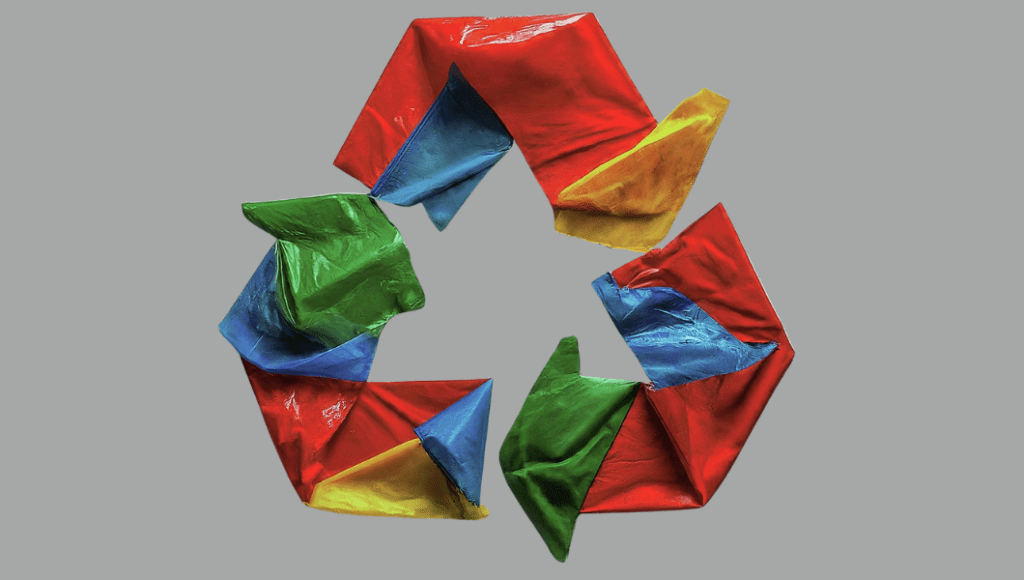
Poly mailers land on doorsteps by the millions. They are the soft plastic envelopes that carry everything from t-shirts to phone cases, and once the package is open, most people have no idea what to do with the empty bag. It feels like plastic that should be recyclable, so a lot of them end up in the wrong bin.
Here is the short version. Poly mailers are recyclable, but they almost never belong in your curbside recycling. They need to go to a store drop-off program, the same bins that collect plastic grocery bags. This guide covers exactly how to do that, where to find a drop-off near you, how to tell a recyclable mailer from one that is not, and which packaging to switch to if you would rather skip the extra step.
The short answer: Remove the shipping label, make sure the mailer is clean and dry, then drop it in a plastic film recycling bin at a participating grocery store, big-box retailer, or pharmacy. Do not put poly mailers in your home recycling bin, where they jam the sorting machines and get sent to the landfill anyway.
Are Poly Mailers Recyclable?
Yes. Nearly all poly mailers are made from polyethylene, the same family of plastic used for grocery bags, bread bags, and shrink wrap. Most are low-density polyethylene, marked with a #4 (LDPE) resin code inside the recycling triangle. Some are high-density polyethylene, marked #2 (HDPE). Both are accepted through plastic film collection programs.
The catch is the format, not the material. Polyethylene film is technically recyclable, but a thin, floppy sheet behaves nothing like a bottle or a can on recycling equipment. That is why it needs its own collection stream instead of your regular bin. If you run an online store, the good news is that a standard custom poly mailer is one of the more recyclable shipping options available, as long as your customers know where the bag actually goes.
Why You Can’t Recycle Poly Mailers in Your Curbside Bin
This trips up almost everyone. You have a plastic envelope, plastic goes in the recycling bin, so in it goes. Unfortunately that is the wrong move in most of the country.
The reason is mechanical. Recycling facilities sort material on high-speed conveyor belts and spinning screens built for rigid items. When a thin film like a poly mailer hits that equipment, it wraps around the rollers and gears. Workers have to stop the line and cut it out by hand. To avoid the constant jams, most curbside programs ban plastic bags and film outright.
There is a second problem: contamination. A stray poly mailer mixed in with paper or bottles can spoil an otherwise clean bale and send good material to the landfill. So when a program says “no plastic bags,” poly mailers fall under that rule even if the word “mailer” is never printed on the bin. The plastic is fine. The bin is the problem.
How to Recycle Poly Mailers Step by Step
The process is short, and most of the work is peeling a label.
- Remove the shipping label and any adhesive. Peel off the label and packing slip. If it will not come off cleanly, cut it out with scissors and throw the label in the trash. Labels use a different material and contaminate the plastic if they go through with the mailer.
- Empty and clean it. Take out any paper inserts, tissue, or void fill. Wipe out any residue inside. The mailer needs to be clean and dry, since moisture causes problems further down the line.
- Check for a resin code or recycling label. Look for a #2 or #4 inside the recycling triangle, or a How2Recycle “Store Drop-Off” label. Either one confirms the mailer belongs in a film bin.
- Find a store drop-off location. Bring your mailers to a plastic film recycling bin, usually near the entrance of a grocery store, big-box retailer, or pharmacy. There is more on finding one in the next section.
- Drop them off loose. Do not stuff your mailers inside a tied plastic bag unless the program specifically asks you to. Loose film is easier to sort and process.
Where to Recycle Poly Mailers Near You
Store drop-off is the main pathway, and it is more common than people expect. National chains like Walmart, Target, Kroger, Safeway, and Whole Foods run plastic film collection at many locations, and plenty of pharmacies do too. The bins usually sit by the front doors, next to the grocery bag return.
To find the closest one, use a film recycling locator:
- plasticfilmrecycling.org, a national directory of bag and film drop-off sites
- how2recycle.info, the store drop-off locator from the How2Recycle label program
- earth911.com, which lets you search by material and zip code
Enter your zip code and the tool lists nearby stores that accept plastic bags and film. It is worth a quick call to confirm before a special trip, since participation changes from store to store over time.
How to Tell If Your Poly Mailer Is Recyclable
Not every envelope that looks like a poly mailer belongs in the film bin. Two quick checks sort it out.
The feel-and-tear test
A standard poly mailer feels and stretches like a grocery bag. If it tears cleanly and has some give, it is single-layer polyethylene and recyclable at drop-off. If it feels stiff or crinkly or has a metallic sheen, it is probably a multi-layer or laminated bag that cannot be recycled through film programs. Those get reused or thrown away.
Check the label
A #2, #4, or How2Recycle Store Drop-Off mark is a green light. No markings, plus a stiff or coated feel, is a sign to reuse the bag or bin it.
One more distinction is worth knowing. Bubble mailers that combine a paper outer layer with a plastic bubble lining cannot be recycled in either stream, because the two materials are fused and will not separate. A padded mailer made entirely of paper is a completely different case: a paper padded mailer goes straight into your curbside bin once the tape and label are off. If you are curious about the padding itself, our glossary breaks down what bubble wrap is actually made of.
What Happens to Poly Mailers After You Recycle Them
It is a fair question, and the answer is more interesting than “they get recycled.”
Once your mailers land in a store drop-off bin, they are collected and baled with other plastic film. From there the bales go to a processor that cleans, shreds, and melts the film into small plastic pellets. Those pellets become new products.
A large share ends up as composite lumber. Companies like Trex, through their NexTrex program, buy huge volumes of store drop-off film and turn it into decking, benches, fencing, and railing. Other recycled polyethylene becomes plastic piping, pallets, trash liners, or fresh film. Your mailer probably will not come back as another mailer, since film usually gets downcycled into sturdier goods, but it stays out of the landfill and replaces virgin plastic along the way.
Mail-Back and Take-Back Programs
If there is no convenient drop-off near you, mail-back recycling is a solid backup. Services like TerraCycle sell prepaid boxes for hard-to-recycle plastics, including flexible film. You fill the box, ship it back, and they handle the sorting and processing. Some packaging brands also run their own take-back programs for used mailers. These options usually carry a cost or come with conditions, so they make the most sense when local drop-off is not realistic.
Common Poly Mailer Recycling Mistakes
A handful of habits quietly undo the effort:
- Putting mailers in the curbside bin. The single most common mistake. Film belongs at store drop-off, not in your home recycling.
- Leaving the label on. Adhesive labels are a different material and contaminate the plastic. Peel or cut them off first.
- Recycling them wet or dirty. Moisture and food residue downgrade the whole batch. Clean and dry only.
- Assuming recycled content means it cannot be recycled again. A mailer made from recycled polyethylene is still polyethylene, and it can go right back into the film stream.
- Tossing compostable mailers in the film bin. Compostable bags look like plastic but contaminate polyethylene recycling. They belong in industrial composting, not drop-off.
- Wish-cycling. If you cannot confirm a mailer is recyclable, do not guess. One contaminated item can spoil an entire bin.
Reuse Your Poly Mailers Before You Recycle Them
Recycling is good. Reuse is better, and poly mailers are built for it. The film is durable enough to survive several trips, so before you retire one, think about:
- Using it for your own returns or outgoing shipments. Many mailers even include a second adhesive strip for exactly this.
- Sending packages to friends, or shipping secondhand items you have sold.
- Storing small parts, cords, or travel-size liquids.
Every extra use spreads the mailer’s footprint across more shipments and pushes the recycling step further out. When it is finally worn out, then it goes to drop-off.
Eco-Friendly Alternatives to Poly Mailers
If the recycling logistics feel like a lot to ask of your customers, the packaging itself is worth a second look. A few options are easier to recycle or compost, and each one fits a different kind of product.
- Recycled poly mailers. Same durability and water resistance as standard poly, but made with post-consumer recycled film so you are not shipping virgin plastic. Still recyclable at store drop-off. Choosing a recycled-content custom poly mailer is the lowest-friction upgrade if you want to keep the format your fulfillment already runs on.
- Paper mailers. Made from paper, so they go straight into the curbside bin with no drop-off required. A paper mailer is best for clothing, documents, and anything that does not need waterproofing.
- Paper padded mailers. Cushioning without the plastic. Honeycomb and paper-padded designs protect the contents and stay fully curbside recyclable, which makes a paper padded mailer a clean swap for a traditional paper-and-plastic bubble mailer.
- Bubble mailers. When you need padding plus print quality, recycled-content and single-material bubble mailers give fragile items protection with a clearer end-of-life than the fused kind.
- Compostable mailers. Made from plant-based films that break down in industrial composting, usually within 90 to 180 days. A compostable mailer is a strong fit for brands whose customers have composting access. Just remember it cannot go into the recycling stream.
| Mailer type | Curbside recyclable | Store drop-off | Compostable | Best for |
| Poly mailer (recycled or standard) | No | Yes | No | Lightweight, waterproof shipments like apparel and accessories |
| Paper mailer | Yes | Yes | No | Documents, books, and flat soft goods that do not need waterproofing |
| Paper padded mailer | Yes | Yes | No | Padded protection without plastic, a swap for traditional bubble mailers |
| Bubble mailer (single-material) | No | Yes, if 100% plastic | No | Fragile items that need cushioning and a recycling pathway |
| Compostable mailer | No | No | Industrial only | Brands whose customers have industrial composting access |
Not sure which one fits your product and your customers? Our sustainability consultingteam and our wider eco-friendly packaging range can help you match the right material to the way you ship, so recycling is something your customers can actually do.
Frequently Asked Questions
Can you put poly mailers in the recycling bin?
No. Most curbside programs reject flexible film because it jams the sorting machinery at recycling facilities. Take poly mailers to a plastic film drop-off bin at a participating grocery store, big-box retailer, or pharmacy instead.
Are poly mailers recyclable?
Yes. Poly mailers are made from polyethylene, usually #4 LDPE or #2 HDPE, and can be recycled at store drop-off film programs once the shipping label is removed and the mailer is clean and dry.
Where can I recycle poly mailers?
At plastic film collection bins in many grocery stores, big-box retailers, and pharmacies. Use plasticfilmrecycling.org, how2recycle.info, or earth911.com to find a location near you by zip code.
Do I have to remove the shipping label before recycling?
Yes. Peel or cut off the label and any packing slip. Adhesive labels use a different material and contaminate the plastic film if they go in with the mailer.
Can you recycle bubble mailers the same way?
Only if the bubble mailer is 100% plastic. Bubble mailers with a paper outer layer and a plastic bubble lining are fused together and cannot be recycled in either stream. Paper padded mailers, by contrast, are curbside recyclable.
What do the #2 and #4 symbols mean?
They are resin codes. #2 is HDPE and #4 is LDPE, the two plastics used to make poly mailers. Both are accepted at plastic film store drop-off programs.
Are compostable mailers recyclable?
No. Compostable mailers need industrial composting and will contaminate a polyethylene film bin. Only compost them where that infrastructure is available to your customers.
Can poly mailers made from recycled plastic be recycled again?
Yes. Recycled polyethylene is still polyethylene, so a recycled-content mailer can re-enter the film recycling stream at store drop-off, just like one made from virgin plastic.
Is it better to reuse or recycle a poly mailer?
Reuse first. The film survives several trips, and reusing a mailer before recycling it spreads its footprint over more shipments. Recycle it at store drop-off once it is worn out.
What can I do if there is no drop-off near me?
Use a mail-back service like TerraCycle, or switch to curbside-recyclable paper or paper padded mailers so you and your customers can skip the drop-off step entirely.
The Bottom Line
Recycling poly mailers comes down to one habit: keep them out of the curbside bin and take them to a store drop-off instead. Peel the label, make sure they are clean and dry, and drop them in the film bin on your next grocery run. Reuse them a few times first if you can.
If you send packages for a living, the easiest way to make that habit stick is to choose recyclable or compostable packaging from the start. Explore our custom poly mailers, paper mailers, and compostable mailers, or talk to our team about building packaging your customers can actually recycle.