

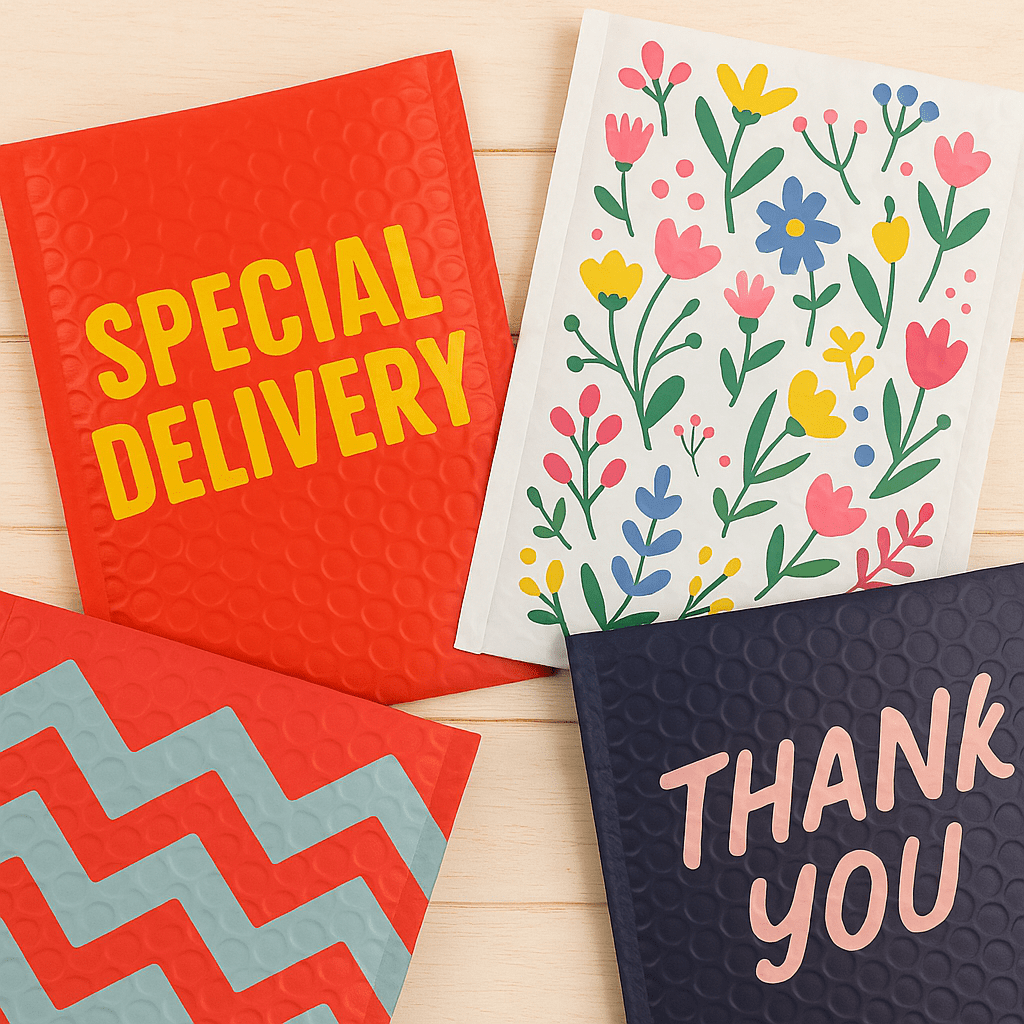
Choosing the wrong bubble mailer size is one of the most common packaging mistakes small shops make. Too big, and your product slides around inside, which defeats the purpose of the padding. Too small, and you’re forcing items in, stretching seams, or risking a mailer that won’t seal properly. Getting the size right isn’t complicated once you know what the standard sizes actually fit and how to measure for them.
This guide breaks down common bubble mailer sizes, what each one typically holds, and how to pick the right fit for your product. It’s also worth knowing when a different mailer type, like a paper mailer or a custom poly mailer, makes more sense than bubble cushioning in the first place, so we’ll cover that too.
Why Bubble Mailer Size Actually Matters
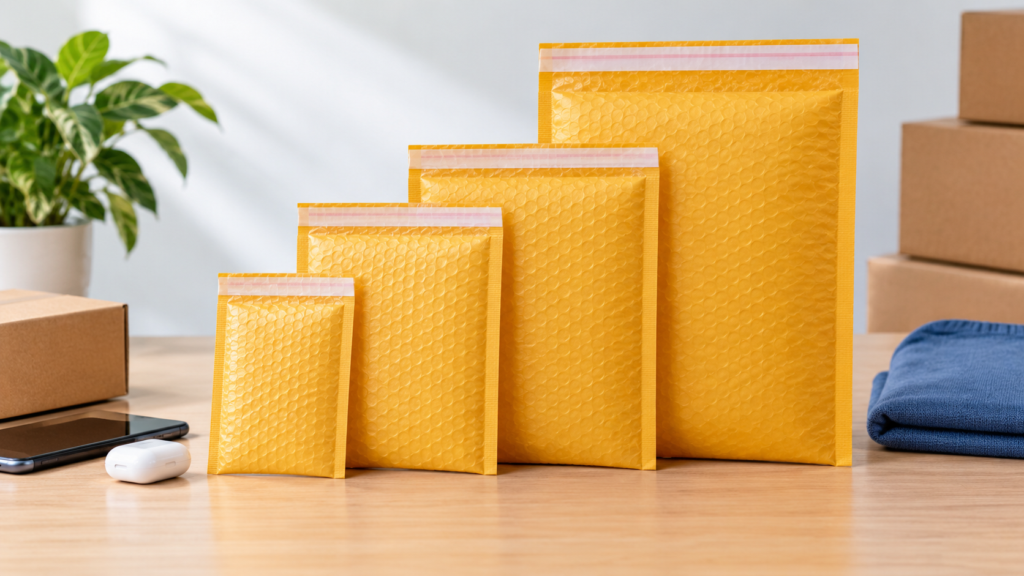
A bubble mailer’s cushioning only works if the product inside isn’t shifting around. When there’s too much empty space, the item bounces against the bubble lining instead of being held snugly against it, and that movement is exactly what leads to corner dings, crushed packaging, or scuffed products on arrival.
On the flip side, cramming a product into a mailer that’s too tight puts pressure on the seams and the seal, which raises the risk of the mailer tearing open in transit. Sizing it right the first time saves you returns, complaints, and wasted packaging costs, whether you’re using a standard bubble mailer, a paper padded mailer, or another padded format.
Standard Bubble Mailer Sizes
Bubble mailers are usually labeled with a number (like #000, #0, #2) that corresponds to a standard set of outer dimensions. Here’s a general breakdown of common sizes and what they’re typically used for:
| Size | Approximate Dimensions | Common Uses |
|---|---|---|
| #000 | 4″ x 8″ | Jewelry, small accessories, USB drives, single enamel pins |
| #00 | 5″ x 10″ | Small cosmetics, candles in tins, multiple small items |
| #0 | 6″ x 10″ | Phone cases, small books, stacked sticker packs |
| #1 | 7.25″ x 12″ | Paperback books, small apparel items, multi-item orders |
| #2 | 8.5″ x 12″ | T-shirts, small boxes, medium-sized candles |
| #3 | 8.5″ x 14.5″ | Larger apparel, bundled multi-product orders |
| #4 | 9.5″ x 14.5″ | Larger books, framed prints, bulkier items |
| #5 | 10.5″ x 16″ | Oversized items, bundled gift sets |
| #6 | 12.5″ x 19″ | Large or multiple bundled products |
| #7 | 14.25″ x 20″ | Bulk orders, large apparel bundles |
These dimensions can vary slightly between manufacturers, so it’s worth confirming exact measurements before ordering in bulk, especially if you’re working with Custom Poly Mailers or Bubble Mailers built to your own specs rather than off-the-shelf sizes. The same goes for Paper Mailers, Paper Padded Mailers, and Compostable Mailers, since a custom size run can shift dimensions slightly from a supplier’s standard template.
How to Measure Your Product for the Right Size
- Measure the product at its widest points, including length, width, and height if it’s not flat.
- Add half an inch to an inch of buffer on each dimension to account for the bubble lining’s thickness and leave a little room for sealing.
- Account for any inserts, like backing boards, tissue wrap, or branded cards, since these add bulk that needs space too.
- Round up, not down, when a product falls between two standard sizes. A slightly loose fit with good internal padding beats a mailer that’s stretched tight.
Matching Mailer Size to Product Type
Different product categories tend to cluster around certain sizes, which makes shopping for mailers easier once you know where your products fall:
- Jewelry and small accessories: #000 or #00 sized bubble mailers are usually enough, often with extra padding or a small box insert for very delicate pieces.
- Stickers and flat prints: These generally don’t need bubble cushioning at all. A properly sized paper mailer with a rigid backing board is often a better, lower-cost fit for flat items.
- Apparel and soft goods: Mid-range sizes like #1 through #3 work for most folded clothing items, though many apparel sellers use custom poly mailers instead, since soft goods don’t usually need bubble cushioning and poly mailers keep shipping weight and cost lower.
- Candles and small fragile items: #00 to #2 sized bubble mailers give solid protection for single candles, though larger or glass candles are often safer in a rigid box than any mailer.
- Books and flat bundles: #1 and #4 sizes are common depending on thickness, often paired with a cardboard stiffener to prevent corner bends.
When a Bubble Mailer Isn’t the Right Call
Sizing only matters if a bubble mailer is the right packaging type to begin with. A few cases where a different mailer makes more sense regardless of size:
- Flat, low-fragility items like stickers or paper goods are usually better suited to a paper mailer, since bubble cushioning adds bulk and cost without much added benefit.
- Items needing strong moisture resistance ship well in custom poly mailers, which are waterproof in a way standard bubble mailers typically aren’t.
- Brands prioritizing sustainability might lean toward paper padded mailers or compostable mailers, both of which offer some cushioning without relying on plastic bubble lining.
Bubble mailers earn their place when a product needs real shock absorption and isn’t heavy enough to require a full box, like small electronics, jewelry, ceramics, or fragile accessories.
How Sizing Compares Across Mailer Types
Standard numbered sizing (#000 through #7) is most consistent with bubble mailers, but it’s worth knowing how sizing habits shift once you move to a different material:
- Custom poly mailers are usually sold by exact inch dimensions rather than numbered sizes, since they’re often ordered as custom runs for apparel and soft goods. A poly mailer can also run slightly larger than a bubble mailer for the same product, since there’s no bubble lining adding thickness inside.
- Paper mailers tend to follow flat, envelope-style dimensions rather than the numbered system, since they’re built for flat or semi-rigid items rather than items with real depth.
- Paper padded mailers size similarly to bubble mailers, since the padded lining adds comparable thickness, so a #0 or #1 bubble mailer size usually has a close paper padded equivalent.
- Compostable mailers are generally sized like standard poly mailers, by exact dimensions rather than numbered sizing, since they share a similar flat, flexible construction.
If you’re switching from one mailer type to another for the same product line, don’t assume the numbered size carries over exactly. Always check the actual interior dimensions against your product measurements.
Common Sizing Mistakes to Avoid
- Ordering one size for the entire catalog. Shops selling varied products almost always need at least two or three mailer sizes to avoid wasting space or crushing items.
- Forgetting to size for inserts. A backing card or branded tag adds real thickness that’s easy to forget when measuring just the product.
- Assuming all #0 or #2 mailers are identical. Dimensions vary slightly by supplier, so always check actual measurements, especially when switching vendors.
- Using bubble mailers for everything. Flat items shipped in bubble mailers waste money on padding they don’t need, when a paper mailer would do the same job for less.
Final Thoughts
Picking the right bubble mailer size comes down to measuring the actual product, adding a reasonable buffer, and resisting the urge to size up just to be safe. Oversized mailers let products shift and lose the benefit of the padding, while undersized ones strain seams and risk tearing. Once you’ve nailed down the right size for each product category, from small bubble mailers for jewelry to larger ones for apparel bundles, packaging stops being a guessing game and starts being one less thing to worry about with every order.
For products that don’t need bubble cushioning at all, it’s worth checking whether a custom poly mailer or paper mailer gets the job done for less.