

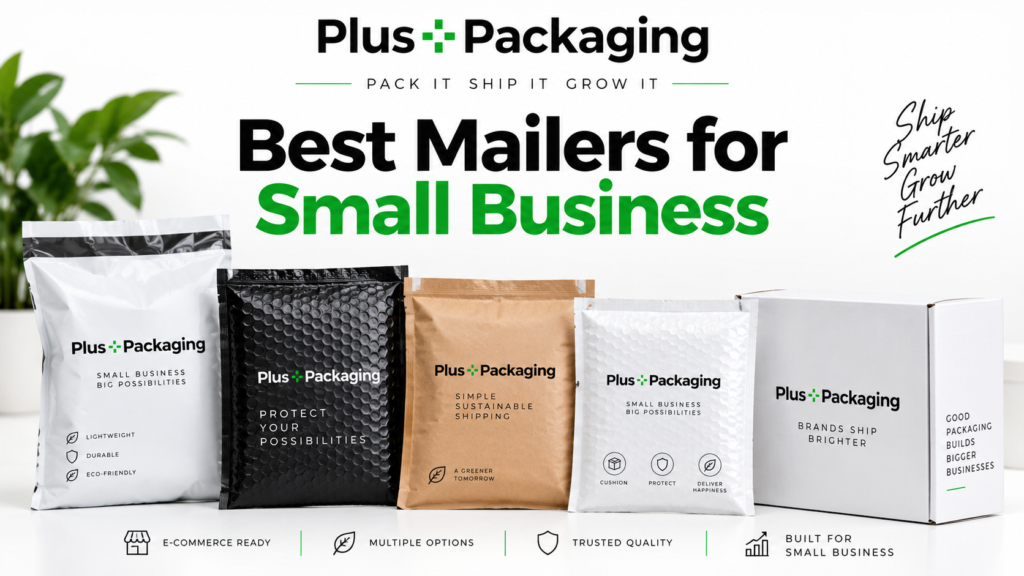
Small businesses face a packaging problem that large retailers don’t: every mailer has to do double duty. It needs to protect the product, reflect the brand, and still make sense at low order volumes and tight margins. A mailer that works for a warehouse shipping ten thousand units a day doesn’t automatically work for a small business shipping fifty orders a week, where cost per unit, minimum order quantities, and versatility across a shifting product mix all matter just as much as protection.
This guide breaks down which mailer type fits which small business scenario, how custom branding factors into the decision, and how to size and order without overcommitting inventory you can’t move through fast enough.
What Small Businesses Actually Need From a Mailer
Before comparing mailer types, it helps to separate the priorities that matter most at small-business volume, since they don’t always line up with what works at enterprise scale.
- Cost per unit at low volume. Large brands negotiate bulk pricing on hundreds of thousands of units. Small businesses need a mailer that stays reasonably priced at order quantities in the hundreds or low thousands.
- Versatility across product types. Many small businesses sell a mix of items, apparel, accessories, small home goods, that don’t all fit the same box. A flexible mailer that handles several product categories reduces the need to stock multiple packaging types.
- Brand presentation on a budget. Custom printing adds cost and typically requires higher minimums, so small businesses often need to decide between a printed mailer, a stamped or labeled generic mailer, or an unbranded option with a printed insert instead.
- Storage space. Without a warehouse, most small businesses store inventory at home or in a small unit, which makes flat, stackable mailers more practical than bulky boxes for day-to-day shipping.
- Minimum order quantities (MOQs). Custom printed packaging often comes with MOQs that can tie up cash flow a small business needs elsewhere, so matching order size to actual sales velocity matters more here than for larger sellers.
Should You Print, Label, or Ship Unbranded?
This decision shapes both your cost structure and your MOQ requirements, and it’s worth settling before choosing a mailer type.
Fully custom printed mailers give the strongest brand impression right out of the gate, since the packaging itself carries your logo and colors. This works well once order volume is consistent enough to justify the Printed Tape and mailer minimums, and a Free Digital Mockup can help confirm the design before committing to a print run.
Generic mailers with printed labels or tape let a small business get branding on the outside of the package without the higher minimums of a fully custom mailer. A plain Poly Mailer or Paper Mailer sealed with Printed Tape or finished with a Custom Printed Label is a common middle ground for businesses still scaling.
Unbranded mailers with a branded unboxing experience put the investment inside the package instead of on it. A generic mailer paired with Tissue Paper, a Hang Tag, or a small printed insert keeps upfront packaging costs low while still creating a memorable moment when the customer opens the box.
None of these is the “right” answer for every small business. It depends on order volume, cash flow, and how much brand impression matters before the package is even opened versus after.
Mailer Types for Small Business, Compared
Poly Mailers: The Default for Most Small Businesses
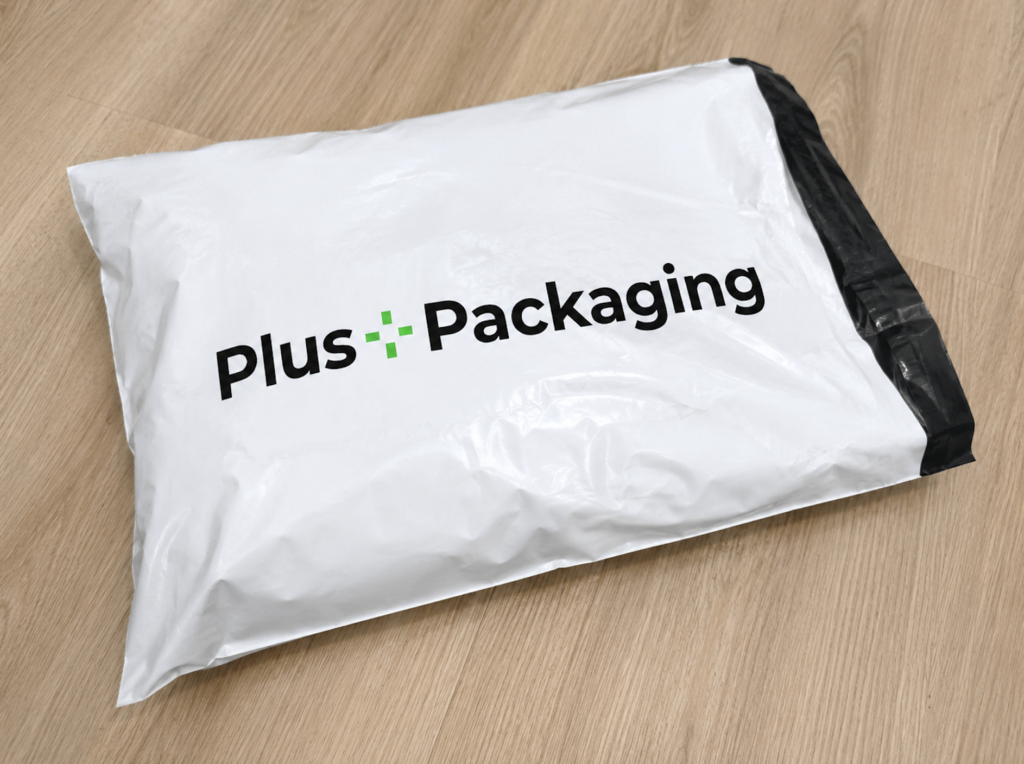
Poly Mailing Bags are the most common starting point for small businesses shipping apparel, accessories, and other soft or semi-rigid goods. They’re inexpensive at low volumes, fully waterproof, and take up minimal storage space compared to boxes.
Poly mailers work especially well for:
- Apparel, small accessories, and soft goods that don’t need rigid protection
- Businesses just starting to ship and wanting to keep packaging costs as low as possible
- Sellers who want a compact, stackable option for home-based storage
The trade-off is presentation. A plain poly mailer doesn’t carry much brand impression on its own, so most small businesses either add a printed label, upgrade to custom printing once volume supports it, or invest the branding budget inside the package instead.
Paper Mailers: A Branding-Friendly, Lower-Impact Option
Paper Mailers give small businesses a more premium, tactile feel than plastic film, and kraft stock takes print and stamping well, which makes it easier to add a logo without a full custom print run. This is a strong fit for brands leaning into a natural, sustainable aesthetic.
The trade-off is water resistance. Paper mailers don’t hold up to rain and humidity as well as poly, so they suit drier shipping regions or businesses willing to pair them with a protective inner wrap for sensitive items.
Bubble Mailers: Protection for Fragile or Higher-Value Items
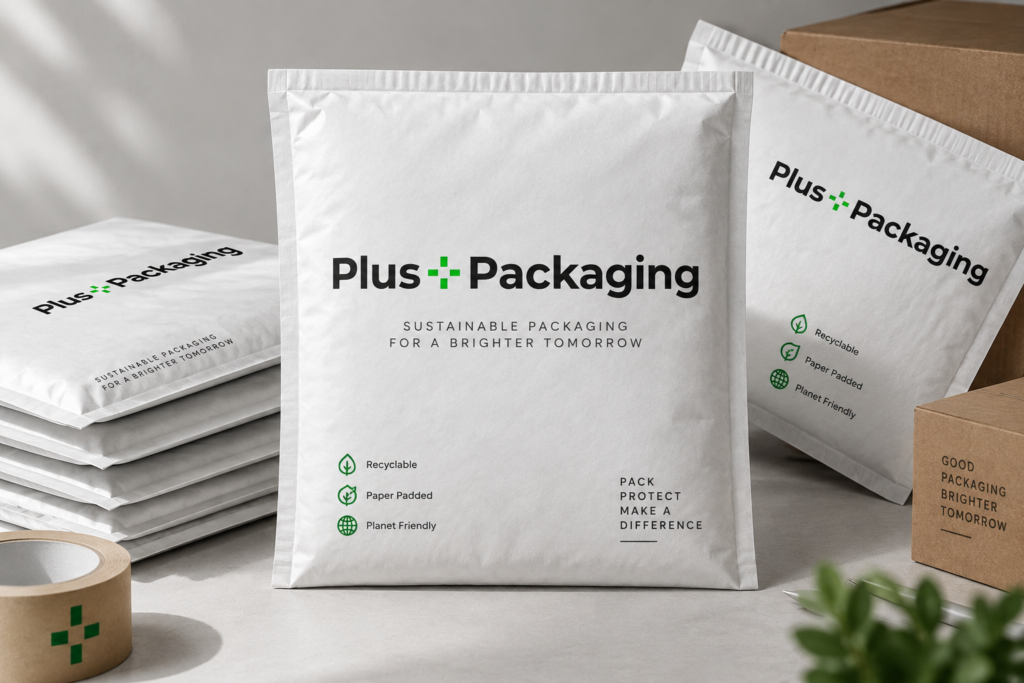
Bubble Mailers add cushioning that plain poly or paper mailers don’t have, which matters for small businesses shipping anything breakable, electronics accessories, small home goods, or items with a delicate finish.
Bubble mailers are a good fit for:
- Fragile or semi-fragile items that don’t need a full box
- Higher-value products where a customer’s first impression on unboxing matters more
- Small businesses that want a step up in protection without adding the storage footprint of a box
They cost more per unit than plain poly or paper mailers, so many small businesses reserve bubble mailers for their more delicate or higher-margin items and use a lighter mailer for the rest of their catalog.
Paper Padded Mailers: A Plastic-Free Step Up in Protection
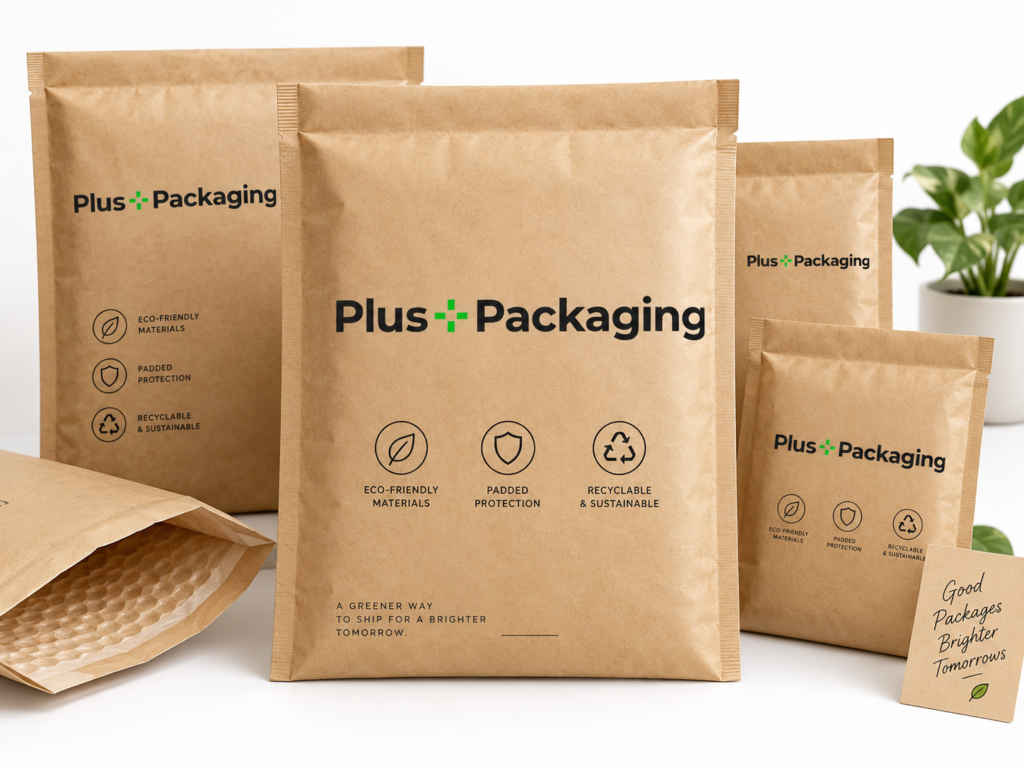
Paper Padded Mailers use recycled paper fiber instead of bubble film for cushioning, giving small businesses a fully paper-based option that still protects better than a flat paper mailer. This suits brands building a sustainability angle into their packaging without wanting to fully commit to a compostable line yet.
Compostable Mailers: For Brands Building an Eco-Conscious Identity Early
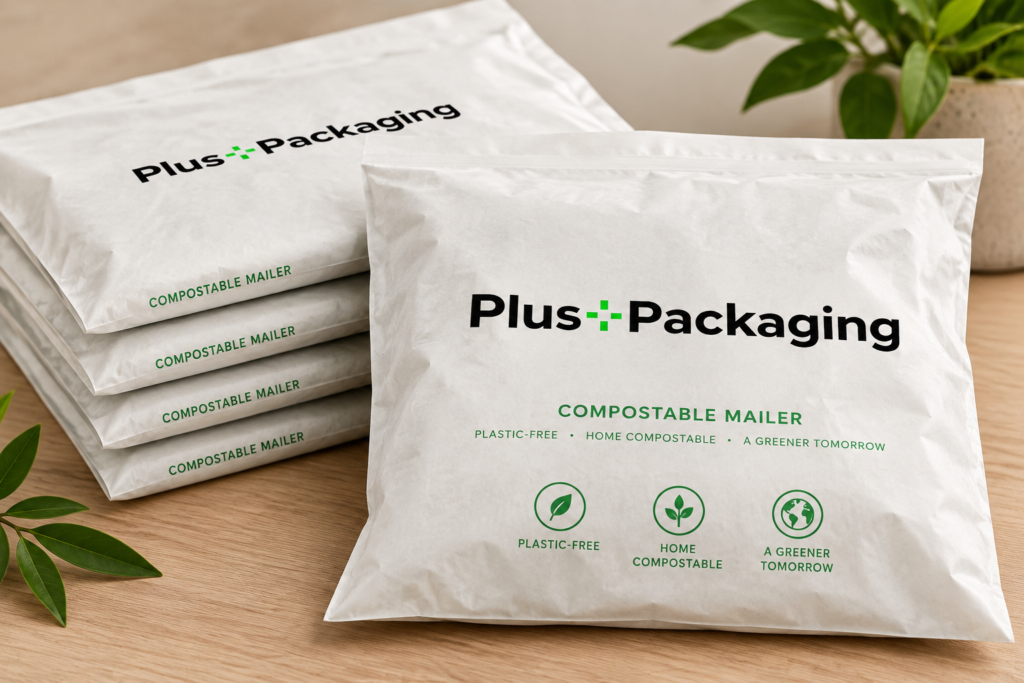
Compostable Mailers let small businesses build a sustainability story into their brand from day one, which can be a meaningful differentiator in crowded categories like beauty, apparel, and lifestyle goods. They generally cost more per unit than standard poly, so many small businesses adopt them once they have a customer base that values the difference enough to justify it.
Mailer Boxes: When Presentation Is the Product
For small businesses where unboxing is part of the value proposition, subscription boxes, gifting brands, or premium goods, a Mailer Box or Custom Kit provides more structure and a stronger first impression than any flexible mailer, at the cost of higher storage space and per-unit price.
Quick Comparison
| Mailer Type | Best For | Branding Ease | Relative Cost at Low Volume |
| Poly Mailers | Apparel, soft goods, cost-conscious starters | Moderate (needs label or print) | Low |
| Paper Mailers | Natural-brand aesthetic, plastic-free | High (kraft takes print well) | Low to moderate |
| Bubble Mailers | Fragile or higher-value items | Moderate | Moderate |
| Paper Padded Mailers | Sustainability-focused, moderate fragility | Moderate to high | Moderate |
| Compostable Mailers | Eco-focused brand identity | Moderate | Moderate to high |
| Mailer Boxes | Unboxing-driven brands, subscriptions | High | High |
Sizing Guide
Ordering the wrong size wastes money twice for a small business: once on the mailer itself, and again on the extra fill material needed to stop a product from shifting inside an oversized bag.
| Product Type | Suggested Mailer Size |
| Small accessories, jewelry, single garments | 6″ x 9″ or 9″ x 12″ |
| T-shirts, folded apparel, small multi-item orders | 10″ x 13″ or 12″ x 15.5″ |
| Sweaters, multi-item apparel orders | 14.5″ x 19″ |
| Bulkier soft goods or small boxed items | 19″ x 24″ gusseted mailer or small Mailer Box |
A few practical notes for small-volume ordering:
- Start with one or two sizes that fit the bulk of your product line rather than a size for every SKU, since fewer sizes mean simpler inventory and lower minimums per size.
- If your product mix varies widely, a gusseted or expansion-style Poly Mailer offers more flexibility than a flat one.
- Order conservatively on your first custom print run. It’s easier to reorder a size that’s working than to sit on excess inventory of a size that isn’t.
Packing Steps for Small-Batch Shipping
- Batch similar orders together. Packing all orders using the same mailer size back-to-back speeds up the process more than switching sizes order by order.
- Add a branded touch inside the package. Tissue Paper, a Hang Tag, or a small thank-you card creates a brand impression even in an unbranded outer mailer.
- Use fill material sparingly but effectively. Crumpled paper or air pillows keep items from shifting without adding meaningful weight or cost to a low-margin small-business shipment.
- Seal with intention. Printed Tape doubles as both a seal and a branding touchpoint, worth the small added cost for the visibility it gets on every package.
- Keep a simple packing station. A small dedicated area with mailers, tape, and inserts organized by size reduces packing time as order volume grows.
- Weigh before finalizing packaging choice. Small businesses are more sensitive to shipping cost per order, so confirm your mailer and fill combination doesn’t push a shipment into a higher rate tier.
When to Move Beyond a Basic Mailer
- Order volume becomes predictable. Once you have consistent monthly order counts, the cost math on custom printed mailers or Custom Kits starts to look different than it does at unpredictable, early-stage volume.
- Product line expands beyond what one mailer size handles well. At that point, working with Packaging Engineering support to standardize a small set of sizes across your catalog can simplify both ordering and packing.
- Return rate or damage complaints increase. If a flat mailer isn’t protecting products well enough in transit, it may be time to step up to a Bubble Mailer, Paper Padded Mailer, or Mailer Box rather than absorbing the cost of replacements.
- Sustainability becomes a customer expectation, not just a nice-to-have. At that stage, transitioning part or all of your line to Compostable Mailers or other eco-friendly packaging may pay off in customer retention even at a higher per-unit cost.
Frequently Asked Questions
What’s the cheapest mailer option for a small business just starting out?
A plain Poly Mailing Bag in a standard size is generally the lowest-cost option at low order volumes, and it works for most soft goods and apparel without needing custom printing right away.
How do I add branding without a high minimum order?
A Custom Printed Label or Printed Tape applied to a generic mailer usually carries a lower minimum than a fully custom printed mailer, and still puts your brand on the outside of the package.
When does it make sense to switch to custom printed mailers?
Once order volume is consistent enough that the minimum order quantity won’t sit in storage for months, custom printing usually becomes cost-effective and creates a stronger unboxing impression than a labeled generic mailer.
Are compostable mailers worth it for a small business?
It depends on your customer base. If sustainability is part of your brand identity and customers are likely to notice and value it, the higher per-unit cost of Compostable Mailers can support customer loyalty and differentiation. If cost is the primary constraint early on, a standard poly or paper mailer with a smaller sustainable touch, like the tissue paper or an insert, may make more sense until volume grows.
Should a small business use boxes or mailers?
Mailers are generally more cost-effective and space-efficient for soft goods and lighter items. Mailer Boxes make more sense once unboxing experience is central to the brand, or for products that need rigid protection.
What to Ask Before Ordering in Bulk
- What’s the minimum order quantity for custom printed mailers versus a labeled or taped generic mailer?
- Can I start with a smaller trial order before committing to a larger print run?
- Can I get a Free Digital Mockup to see my branding on the mailer before ordering?
- What’s the cost difference between a fully custom mailer and a generic mailer with printed tape or a label?
- Do you offer Sustainability Consulting or Cost Reduction support for small businesses scaling their packaging spend?
- What’s the production and lead time, and how does it change at smaller order quantities?
Final Thoughts
There’s no single best mailer for small business, only the best fit for your product mix, order volume, and where you want your branding investment to show up. Poly Mailing Bags cover most soft goods at the lowest cost. Paper Mailers offer an easy, budget-friendly branding surface. Bubble Mailers and Paper Padded Mailers step in when items need more protection, and Compostable Mailers or a Mailer Box make sense once brand identity or unboxing experience becomes a bigger part of the business.
Start with the mailer that matches your current order volume and product line, not the one that matches where you hope to be in a year. It’s easier and cheaper to scale up packaging as the business grows than to sit on excess inventory of a size or style that doesn’t fit anymore.