

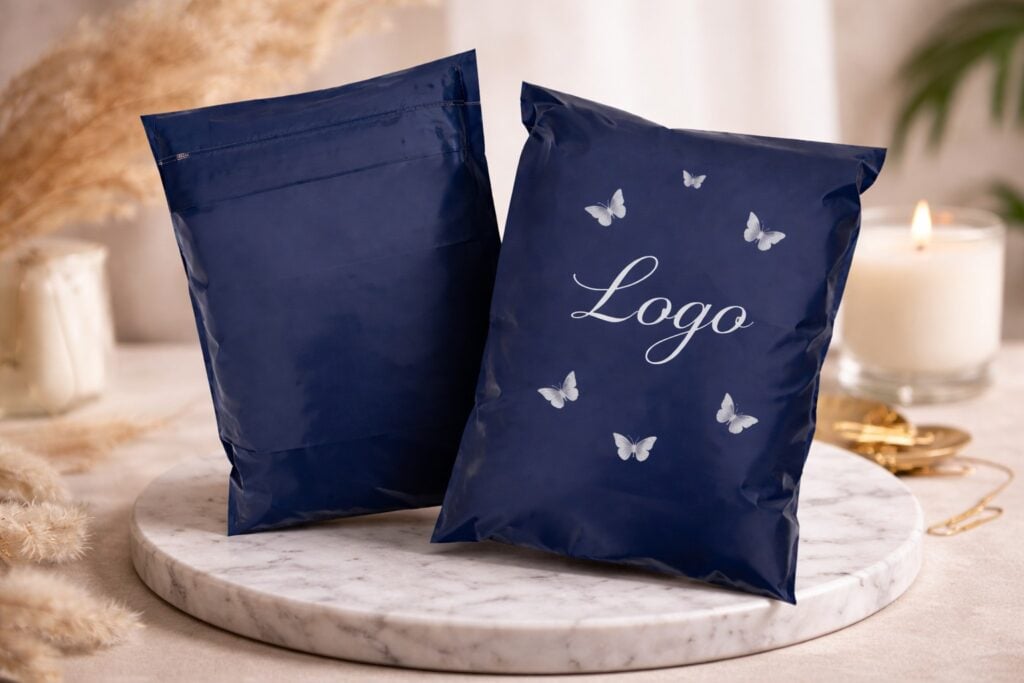
Quick answer: For most everyday apparel: t-shirts, hoodies, basics, a poly mailer is the standard: lightweight, waterproof, and the cheapest option per unit. Reach for a bubble mailer when the garment has structure or delicate embellishment, a paper mailer for a premium or boutique unboxing feel, and a padded paper or compostable mailer when plastic reduction is part of your brand story.
Clothing is one of the easiest products to ship badly. It’s soft, it’s flexible, and it doesn’t need the rigid protection a box gives you which is exactly why so many apparel sellers overspend on packaging their products don’t actually need. The real question isn’t “what’s the sturdiest mailer I can buy,” it’s “what mailer protects my clothing, looks good on arrival, keeps returns simple, and doesn’t inflate my shipping costs.”
This guide breaks down every mailer type that actually works for apparel, exact sizing by garment, the returns and branding details most guides skip, and what to check before placing a bulk order.
Why Clothing Doesn’t Need the Same Packaging as Everything Else
Unlike electronics, ceramics, or glassware, folded clothing bends and compresses without breaking. That shifts the priorities. Instead of heavy cushioning, you’re mainly protecting against:
- Moisture and rain damage during transit and last-mile delivery
- Dirt, dust, or handling marks from warehouse and delivery staff
- Seams splitting under weight if the mailer is undersized or overstuffed
- A cheap unboxing experience that doesn’t match the price point of the garment
- A clunky returns process, which affects repeat purchase rates as much as the initial delivery does
Because of this, most apparel brands don’t need a heavily padded shipping box. A well-chosen, correctly sized mailer covers all five of those concerns at a fraction of the cost and dimensional weight of a box.
Poly Mailers: The Standard Choice for Apparel
For the majority of clothing brands, Custom Poly Mailers are the default pick, and for good reason. The polyethylene shell is water resistant, tear resistant, and flexible enough to mold around folded garments without wasted space. They’re also light, which keeps shipping costs down since most carriers price by dimensional weight, not just actual weight.
Poly mailers work especially well for:
- T-shirts, hoodies, and sweatshirts
- Activewear and swimwear
- Socks, underwear, and other soft accessories
- Any apparel without hard components like buttons, buckles, or embellishments that could poke through the film
Self-sealing adhesive strips make packing fast, and most suppliers offer full custom printing so the exterior carries your logo and brand colors instead of shipping in a plain gray bag.
Best for: t-shirts, hoodies, activewear, socks and accessories, most everyday apparel orders
When Clothing Needs Extra Cushioning: Bubble Mailers
Not every garment is soft all the way through. Items with structure, delicate embellishments, sequins, embroidery, jewelry-adjacent accessories, or anything folded around a stiff insert (a branded hang tag or gift box) benefit from actual cushioning rather than just a protective shell.
That’s where Bubble Mailers come in. The air-bubble lining absorbs impact and prevents crushing, which matters if you’re shipping structured garments, delicate knitwear, or apparel bundled with accessories like sunglasses or jewelry. They cost a bit more per unit than a standard poly mailer, but for higher-value items the reduction in damage claims and returns usually justifies it.
Rule of thumb: if the garment would look noticeably worse folded under pressure for two or three days in transit, upgrade to a bubble mailer. If it bounces back fine, a standard poly mailer is enough.
Best for: structured garments, embellished pieces, apparel bundled with hard accessories, premium/gift orders
Paper Mailers: A Premium, Lower-Plastic Option
Apparel brands leaning into a more elevated, boutique feel often move toward Paper Mailers. The kraft paper exterior has a texture and warmth that plastic can’t replicate, and custom printing tends to look richer on paper stock than on poly film, a popular choice for brands positioning themselves as premium, minimalist, or sustainability-forward.
The tradeoff is durability. Paper mailers don’t handle moisture as well as poly, so they’re a better fit for brands shipping in drier regions, or paired with an inner poly liner for wet-weather protection.
Best for: boutique and DTC brands prioritizing unboxing experience, drier shipping regions
Padded Paper Mailers: Cushioning Without the Plastic
For brands that want cushioning like a bubble mailer but want plastic out of the equation, Paper Padded Mailers use recycled paper fiber or crumpled paper padding instead of air-bubble film. They protect structured or delicate garments reasonably well while staying fully paper-based, which appeals to brands built around plastic-free packaging.
They won’t cushion quite as effectively as a true bubble mailer, so they’re best suited to apparel that needs some protection but isn’t especially fragile: structured jackets, folded denim, or garments with light embellishment rather than anything with hard, breakable components.
Best for: structured items, plastic-free brand positioning
Compostable Mailers: For Sustainability-First Apparel Brands
If your brand’s entire identity is built around sustainability, organic cotton, low-impact dyes, a closed-loop supply chain, your packaging should match. Compostable Mailers break down under industrial composting conditions and are increasingly common among apparel brands avoiding plastic waste entirely.
They work well for soft, non-fragile clothing items and pair naturally with a brand story customers already care about. Two things worth knowing:
- Disposal requires the right conditions. Most compostable mailers need a municipal or industrial composting facility to break down as intended, they generally won’t fully compost in a home bin or a landfill within a normal timeframe. Say this plainly on your packaging or order confirmation, since vague “eco-friendly” claims without disposal instructions are exactly what triggers greenwashing complaints and, in the U.S., scrutiny under the FTC’s Green Guides.
- Sizing matches poly mailers. Most compostable mailers ship in the same core size range as poly mailers, so switching doesn’t usually mean re-testing your packing process.
Best for: sustainability-first apparel brands, soft non-fragile garments
Returnable (Double-Strip) Poly Mailers: Built for Apparel’s Return Rate
Apparel has one of the highest return rates of any e-commerce category, and it’s worth calling out a format the original comparison usually misses: returnable poly mailers, which include a second, factory-applied adhesive strip so the customer can reseal and ship the same bag back without needing a box or extra tape.
They cost slightly more per unit than a standard poly mailer but can reduce return-related packaging spend and make the return process smoother for the customer, which matters, since a frictionless return experience is consistently linked to repeat purchase behavior in apparel e-commerce. They’re available in the same standard sizes as regular poly mailers and work with most automated bagging equipment.
Best for: brands with return rates above the e-commerce average (activewear, fit-dependent categories, higher price points)
Quick Comparison: Which Mailer Fits Your Clothing?
| Mailer type | Best For | Water Resistance | Cushioning |
| Custom Poly Mailers | T-shirts, hoodies, soft everyday apparel | High | Low |
| Bubble Mailers | Structured, delicate, or embellished garments | Moderate to high | High |
| Paper Mailers | Boutique, minimalist, or premium apparel brands | Low | Low |
| Paper Padded Mailers | Structured items, plastic-free packaging goals | Low to moderate | Moderate |
| Compostable Mailers | Sustainability-focused apparel brands | Moderate | Varies |
Poly Mailer Size Chart for Clothing
Sizing is the single biggest factor in both shipping cost and protection, an oversized mailer wastes money on dimensional weight and lets the garment shift; an undersized one stresses the seams. Use this as a starting point and adjust for how tightly you fold:
| Mailer Size | Best For |
| 6″ × 9″ | Socks, underwear, thin accessories, scarves |
| 9″ × 12″ | Single shirts, blouses, shorts, kids’ clothing |
| 10″ × 13″ | Adult t-shirts, jeans, light jackets, up to ~5 folded shirts |
| 12″ × 15.5″ | Sweaters, dresses, jeans, S/M/L hoodies |
| 14.5″ × 19″ | XL/XXL hoodies, coats, bulkier outerwear, multi-item orders |
| 19″ × 24″+ | Bundled orders, blankets, winter coats, bulk apparel |
For brands shipping a wide size range, stock the 10″ × 13″ and 12″ × 15.5″ as your two primary sizes, together they cover the large majority of adult garment shipments. Compostable and returnable mailers are typically available in this same size range, so switching formats doesn’t require re-testing your packing process. For a deeper breakdown by garment and fold style, see our full poly mailer size guide.
How to Size a Mailer for Clothing
Sizing mistakes are common with apparel because garments compress differently depending on fold style. A few guidelines:
- Fold the garment the way you’ll actually ship it (not flat off a hanger) before measuring.
- Leave enough slack that the mailer doesn’t stretch tight across the seams, but not so much that the item shifts around inside during transit.
- Standardize sizes where possible. Most apparel brands can cover their entire catalog with two or three mailer sizes; for example, a smaller size for basics like t-shirts and socks, and a larger size for hoodies, jackets, or multi-item orders.
- Size up slightly for bundled orders (a garment plus accessories) rather than forcing everything into a snug bag, since overstuffing is the most common cause of seam failure.
- Watch dimensional weight. Carriers price by the greater of actual or dimensional weight, so an oversized mailer with a lot of empty air can quietly push a light garment into a higher-cost tier.
Branding and Unboxing Considerations
Apparel unboxing gets shared on social media more than almost any other product category, which makes the mailer itself part of your marketing. A few things worth prioritizing when you customize:
- Full exterior printing rather than just a small logo sticker, especially if your brand relies on visual identity.
- Matte finishes, which tend to photograph better than glossy poly and feel more premium in hand.
- Consistent branding across mailer types if you use more than one (e.g., poly for everyday orders, bubble for higher-value pieces), so packaging still feels cohesive across your product line.
- Interior printing or tissue accents, which can elevate a simple poly or paper mailer without the cost of a rigid box.
- A clean, legible return panel if you’re using a returnable mailer, customers abandon returns when the instructions are unclear, not just when the process is inconvenient.
Common Mistakes That Hurt Apparel Shipments
- Oversizing “for safety.” More air inside a poly mailer means more shifting, more dimensional weight cost, and a worse unboxing, not better protection.
- Using poly mailers for anything with hard embellishments. Buttons, zippers with metal pulls, or beading can puncture the film from the inside during transit; use a bubble mailer or add an interior wrap.
- Ignoring return rate when choosing packaging. For categories like activewear, swimwear, or shoes, a standard non-returnable poly mailer adds friction (and cost) to every return.
- Vague sustainability claims. “Eco-friendly” without disposal instructions undermines the brand story you’re trying to build with compostable or recycled packaging, say specifically what the customer should do with it.
- Skipping the physical sample. Screen proofs and spec sheets rarely match printed color or material feel exactly; always test a real sample against your actual garment before a full production run.
What to Ask Before Ordering in Bulk
Before committing to a large print run, confirm a few things with your supplier:
- What’s the minimum order quantity for custom printed runs, and does it scale down for smaller or newer brands?
- Can you get a physical sample before the full order ships? Screen proofs rarely match printed color exactly.
- What’s the lead time, particularly heading into a peak season like back-to-school or the holidays?
- Is the material recyclable, compostable, or made with recycled content and is that claim backed by anything verifiable?
- Are sizes and print placement consistent across production batches, especially if you’re running fulfillment with any automation?
- Do you offer a returnable (double-strip) option for the same size and branding, in case your return rate justifies it later?
Frequently Asked Questions
What is the best mailer for shipping clothes? For most everyday apparel like t-shirts and hoodies, a poly mailer is the best combination of cost, weight, and water resistance. Structured or delicate garments do better in a bubble mailer.
What size poly mailer do I need for a t-shirt? A 9″ × 12″ mailer fits a single folded t-shirt; a 10″ × 13″ comfortably fits one t-shirt with room to spare or several folded together.
What size poly mailer fits a hoodie? A 12″ × 15.5″ mailer fits most S/M/L hoodies. XL and XXL hoodies, or bulkier fleece, typically need a 14.5″ × 19″.
Can I ship clothing in a paper mailer? Yes, paper mailers work well for apparel, especially for brands prioritizing a premium or sustainable unboxing feel. They’re less water-resistant than poly, so they’re best in drier shipping regions or with an inner protective layer.
Are compostable mailers good for clothing? Yes, for soft, non-fragile garments. They typically match standard poly mailer sizes and appeal to sustainability-focused customers, but they need industrial composting conditions to break down as marketed.
Should I use a returnable poly mailer for clothing? It’s worth it if your return rate is above average, common in fit-dependent categories like activewear and swimwear. The dual adhesive strip lets customers reseal and ship the same bag back without extra packaging.
Final Thoughts
For most clothing brands, Custom Poly Mailers will cover the majority of shipments at the lowest cost and weight. Reach for Bubble Mailers when a garment has structure or delicate details that need real cushioning, and consider Paper Mailers if your brand’s aesthetic leans premium or minimalist. If plastic reduction matters to your customers, Paper Padded Mailers and Compostable Mailers let you protect your garments without compromising on that story, and if returns are a meaningful cost center, a returnable double-strip mailer is worth testing.
The best mailer for clothing isn’t the fanciest or the cheapest option on the shelf. It’s the one that matches how fragile your specific product actually is, fits it without wasted space, and gives your customer a good first impression the moment the package arrives.