


“Biodegradable” and “compostable” get used like they mean the same thing, on packaging labels, in marketing copy, even in supplier catalogs. They don’t. Mixing them up can lead a brand to make a sustainability claim it can’t back up, or lead a customer to toss packaging in the wrong bin entirely. Packaging and containers made up over a quarter of U.S. municipal solid waste in recent EPA estimates, so getting the disposal claim right isn’t a small detail. It’s the difference between packaging that actually does what it says and packaging that just sounds good on a product page.
Here’s what each term actually means, how to tell a real claim from a marketing one, and how to choose between them for your own packaging.
Compostable vs. Biodegradable at a Glance
| Compostable | Biodegradable | |
| Breaks down into | Water, CO2, and biomass, no toxic residue | Smaller organic compounds, timeline not guaranteed |
| Requires | Specific composting conditions (heat, moisture, microorganisms) | No fixed environment; can break down in soil, water, or landfill |
| Timeframe | Defined and testable, often 12 weeks to 6 months industrially | Undefined; can take months or decades |
| Certification standard | ASTM D6400, EN 13432, BPI, OK Compost | No universal certification |
| Common materials | Cornstarch, bagasse (sugarcane fiber), PLA | Plant-based plastics, paper, treated conventional plastics |
| Risk of greenwashing | Low, if certified | High, term is loosely regulated |
What is Compostable Packaging?
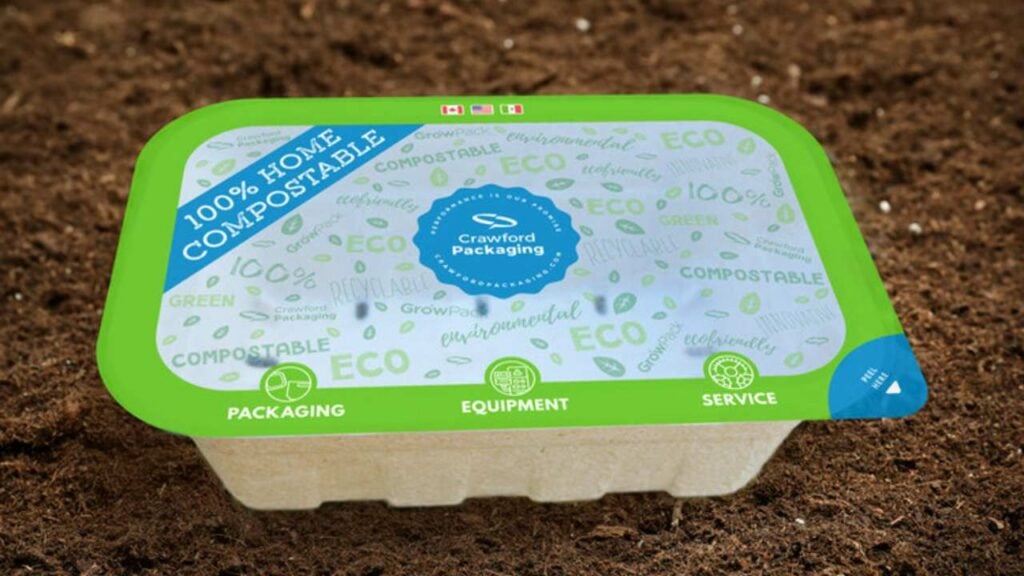
Compostable packaging is designed to break down into nutrient-rich compost, but only under specific conditions. That qualifier is the part most marketing skips. To legitimately call something compostable, it has to decompose into water, carbon dioxide, and biomass within a defined window, without leaving behind microplastics or toxic residue.
Common compostable materials include cornstarch, bagasse (sugarcane fiber), and PLA (polylactic acid), all plant-derived. In a composting environment, whether an industrial facility or, for a smaller set of materials, a home compost pile, microorganisms combined with heat and moisture break the material down into usable compost that can go back into soil.
The catch: most compostable packaging needs an industrial facility to break down within its claimed timeframe. Drop it in a regular trash bin and it may sit in a landfill for years without the right conditions to decompose at all. A compostable claim only means something if there’s an actual composting pathway available to whoever’s disposing of it.
What is Biodegradable Packaging?

Biodegradable packaging also breaks down through the action of microorganisms, but without the strict conditions or defined timeline that compostable materials require. It can decompose across a range of environments, landfill, soil, water, and covers a wider range of materials: plant-based plastics, paper, and even conventional plastics treated with additives meant to speed up breakdown.
That flexibility sounds like an advantage, but it’s also where the term gets murky. “Biodegradable” carries no built-in guarantee about how long the process takes or what it actually breaks down into. Technically, almost anything is biodegradable given enough time, some plastics take centuries. That’s why the claim alone, without a timeframe or environment attached, tells you very little.
The Core Difference, in Plain Terms
Every compostable material is biodegradable. Not every biodegradable material is compostable. That’s the whole distinction, and it comes down to two things: the conditions required and the standard of proof behind the claim.
- Conditions: Compostable packaging needs a specific environment, usually an industrial composting facility, to break down as designed. Biodegradable packaging can decompose in various environments, though the process may take considerably longer and the outcome is less predictable.
- Standard of proof: Compostable claims are typically backed by certification standards that test disintegration time, toxicity, and biomass conversion. Biodegradable is a looser term with no universal certification behind it, which is exactly why it shows up more often in marketing.
If a brand tells you something is biodegradable, ask under what conditions and over what timeframe. If they can’t answer that, the claim isn’t worth much.
Certifications Worth Actually Checking For
Since “compostable” and “biodegradable” aren’t legally protected the same way in every market, certifications are the fastest way to separate a real claim from a marketing one:
- ASTM D6400 – the U.S. standard for materials that are compostable in industrial facilities.
- EN 13432 – the equivalent European standard, covering biodegradability, disintegration, and ecotoxicity.
- BPI Certified – Biodegradable Products Institute certification, widely used across North America for compostable packaging and foodservice ware.
- OK Compost INDUSTRIAL / OK Compost HOME – TÜV Austria certifications that specify whether a material composts in an industrial facility only, or safely in a home compost bin too.
No certification exists that carries the same weight for “biodegradable” alone, which is part of why sustainability organizations increasingly recommend prioritizing certified compostable materials over uncertified biodegradable ones when the two are both on the table.
Why the Distinction Matters for Your Packaging Choices
This isn’t just semantics. It affects both how your packaging performs environmentally and how customers judge your brand’s sustainability claims.
Packaging labeled compostable that ends up in a landfill instead of an industrial facility won’t compost, it’ll just sit there like anything else. If a customer later finds that out, it’s a credibility problem, not just a disposal one. Biodegradable packaging that genuinely breaks down under ordinary conditions can be the more realistic option for brands whose customers don’t have access to composting infrastructure in the first place.
The format matters as much as the material here. If you’re shipping products and want an option built specifically to meet compostable standards rather than just carry the word on a label, compostable mailers are designed for exactly that. They’re a solid fit for brands that need their packaging claims to hold up under scrutiny, not just look good in a product photo.
If full industrial compostability isn’t a hard requirement but you still want to move off plastic, paper mailers and paper padded mailers are both recyclable and biodegradable under ordinary conditions, no industrial facility required. Paper padded mailers specifically give you the cushioning of a bubble mailer without the plastic.
For products that genuinely need the durability of plastic, bubble mailers and custom poly mailers remain the more cost-effective and protective choice. It’s worth being upfront with customers about that tradeoff rather than mislabeling the packaging as something it isn’t.
How to Tell If a Claim Is Legitimate
Before trusting a compostable or biodegradable label, whether you’re sourcing packaging for your brand or evaluating a supplier’s marketing:
- Look for a certification, not just wording. ASTM D6400, EN 13432, BPI, or OK Compost mean the material was actually tested against a standard, not just described that way.
- Ask what environment is required. “Compostable” without a qualifier usually means industrial composting, not a backyard bin.
- Check the timeframe. Legitimate compostable materials break down within a defined window. Vague claims with no timeline attached are a red flag.
- Watch for “degradable” used alone. It’s a weaker, broader claim than either biodegradable or compostable, with no standard for how or how fast something breaks down, and it’s often used to imply more than it promises.
Frequently Asked Questions
Is compostable packaging better than biodegradable packaging? For most brands, yes, if it’s certified. Compostable claims come with testable standards for timeframe and toxicity, while biodegradable claims don’t. That said, biodegradable materials that break down under ordinary conditions can still be the more practical choice when composting infrastructure isn’t available to your customers.
Can compostable packaging go in a home compost bin? Only if it’s certified for home composting specifically, such as OK Compost HOME. Most compostable packaging is certified industrial-only, meaning it needs the higher heat and controlled conditions of a commercial facility to break down as intended.
Does biodegradable packaging still contain plastic? It can. Some biodegradable packaging uses conventional plastic treated with additives to speed up breakdown, which can still leave behind microplastic fragments. Plant-based biodegradable materials, like some paper products, don’t have this issue.
How long does compostable packaging take to break down? Industrially compostable materials are generally required to disintegrate within about 12 weeks and fully biodegrade within 180 days under certified standards like ASTM D6400. Home compostable materials can take longer depending on conditions.
The Bottom Line
Compostable and biodegradable packaging both aim at the same outcome, less waste sitting around for decades, but they get there differently and require different conditions to actually deliver. Compostable materials need specific facilities and meet stricter, certifiable standards. Biodegradable materials are more flexible about environment but far less predictable about the outcome. Neither is automatically “better,” it depends on your product, your customers’ access to composting infrastructure, and how much protection your packaging actually needs.
If you’re weighing options for your own shipping packaging, compare compostable mailers against paper mailers, paper padded mailers, bubble mailers, and poly mailers side by side rather than choosing based on which word sounds greener. The right fit depends on what you’re shipping, not on which label reads best.