

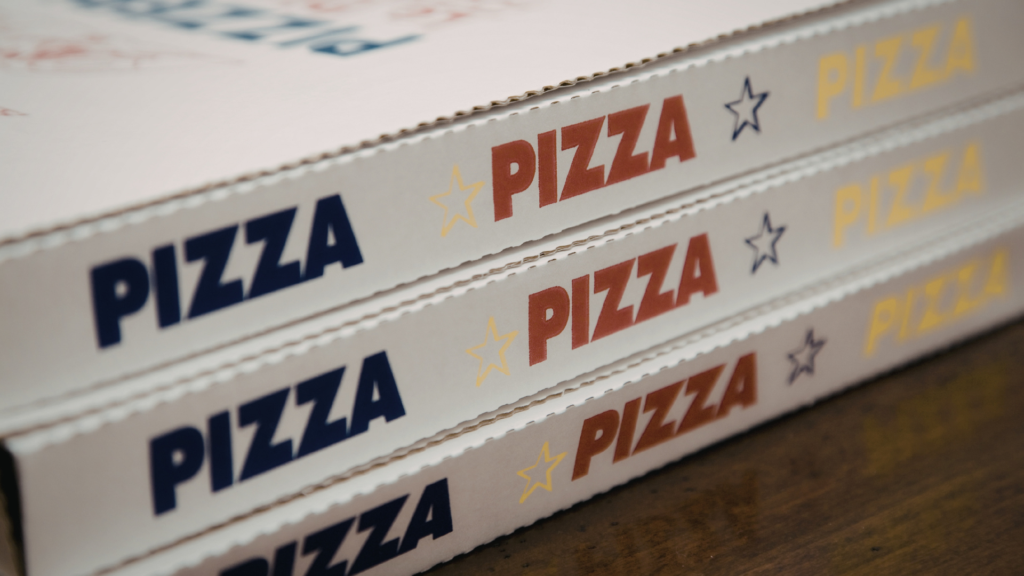
Yes, most pizza boxes are compostable, even when they’re greasy, as long as they’re made from plain corrugated cardboard and don’t include plastic liners, wax coatings, or glossy finishes. The confusion usually comes from recycling rules, not composting rules. Composting handles food residue far better than paper recycling ever could.
Below, you’ll find a straightforward breakdown of when pizza boxes belong in compost, when recycling works, and when the trash is the only option. We’ll also cover greasy pizza boxes, backyard vs commercial composting, and where packaging design plays a role, especially for food businesses choosing sustainable packaging.
Why Pizza Boxes Cause So Much Confusion
Pizza boxes sit right at the intersection of recycling and composting rules, which is where most disposal mistakes happen. Cardboard is recyclable, food waste is compostable and pizza boxes usually contain both.
Once grease and oil soak into cardboard, most recycling facilities reject it. Composting programs, on the other hand, are built to handle food scraps, oils, and organic residue. That’s why a box that fails recycling standards often works perfectly in compost.
Are Greasy Pizza Boxes Compostable?
Yes. Greasy pizza boxes are compostable in most composting systems. Grease, cheese, and food residue do not prevent composting. Microorganisms and worms break down cardboard fibers along with oils and food scraps as part of the normal composting process.
What does matter is the material of the box itself. Grease is fine, but plastic isn’t.
A pizza box can go in compost if it is made from:
- Plain corrugated cardboard
- Kraft paperboard
- Uncoated fiber-based materials
A pizza box should not be composted if it contains:
- Plastic liners
- Wax or polyethylene coatings
- Plastic windows
- Heavy glossy or laminated finishes
Grease alone is not the issue. Non-compostable materials are.
Composting vs Recycling Pizza Boxes: What Actually Works
Many people default to recycling without checking the condition of the box, which causes some problems.
Quick Disposal Guide
| Disposal Method | Works for Greasy Boxes? | Notes |
| Curbside recycling | No | Clean, grease-free tops only |
| Commercial composting | Yes | Grease and food residue accepted |
| Backyard composting | Sometimes | Best with torn pieces and moderate grease |
| Trash | Yes | Last resort |
If part of the box is clean and grease-free, you can tear it off and recycle that section. The greasy bottom belongs in compost, not recycling.
Why Pizza Boxes Usually Can’t Be Recycled
Paper recycling relies on water-based processing. Oils and grease don’t mix well with that system.
When greasy cardboard enters a recycling batch oil binds to paper fibers, the fibers fail to separate properly and entire batches can be downgraded or discarded. That’s why many municipalities ask residents not to recycle food-soiled paper products. This isn’t about being strict. It’s about avoiding contamination that ruins usable material. Composting skips this problem entirely.
Backyard Composting vs Commercial Composting
Not all composting systems behave the same way.
Commercial Composting
Commercial composting facilities are designed for food scraps, oils and grease and soiled paper products.
Greasy pizza boxes break down easily in these systems and are widely accepted.
Backyard Composting
Home compost piles can still handle pizza boxes, with a bit of care:
- Tear boxes into smaller pieces
- Balance greasy cardboard with yard waste or dry leaves
- Skip boxes soaked with excessive oil
Many people use pizza boxes as a “brown” material when carbon-rich inputs run low, especially in colder months.
What Makes a Pizza Box Compostable or Not?
The biggest factor is packaging design.
Compostable Pizza Box Materials
- Corrugated cardboard
- Kraft paperboard
- Plant-based inks
- Minimal adhesives
Non-Compostable Features
- Plastic coatings
- Wax layers
- Laminated interiors
- Synthetic liners
For restaurants and food brands, choosing compostable food packaging starts at the design stage. Boxes made from uncoated fiber materials break down cleanly and fit both residential and commercial composting systems.
This is where packaging suppliers focus most sustainability efforts with selecting materials that perform well for food service while staying compatible with real-world composting programs.
Should Restaurants Compost Pizza Boxes?
For food businesses, pizza boxes make up a large share of packaging waste. Composting them reduces landfill volume and simplifies waste sorting.
Practical Steps for Restaurants
- Set up a dedicated compost bin for boxes and food scraps
- Train staff on separating clean cardboard from compostable cardboard
- Choose compostable pizza boxes with no plastic liners
- Share disposal guidance with customers through signage or box printing
Clear labeling helps customers dispose of packaging correctly once food leaves the restaurant.
Can You Compost Pizza Boxes With Food Still Inside?
Small amounts of food residue are fine. Large leftovers should be removed.
Before composting you need to scrape out crusts and toppings, remove plastic sauce cups or liners and tear the box into sections if possible
This keeps compost bins cleaner and reduces pests, especially in backyard setups.
Common Myths About Pizza Box Composting
“Grease ruins compost”
It doesn’t. Compost systems process fats and oils as part of organic waste.
“Pizza boxes belong in recycling”
Only the clean parts do. Greasy sections usually don’t.
“All cardboard is compostable”
Material treatments matter more than the cardboard itself.
Final Thoughts
Pizza boxes create confusion, but the rule is simple. Greasy pizza boxes are compostable, most greasy pizza boxes are not recyclable and material choice matters more than food residue
When pizza boxes are made from plain corrugated cardboard without plastic or wax coatings, composting turns food-soiled packaging into useful soil instead of landfill waste.
For businesses that care about sustainability, choosing compostable pizza boxes from responsible packaging suppliers, and pairing them with other eco-friendly options like custom retail bags, makes disposal easier for customers and better for waste systems overall.
If you’re still unsure, check your local composting guidelines, then compost the box with confidence.