

Packing tape and duct tape serve different purposes: packing tape excels at sealing cardboard boxes for shipping and storage, while duct tape works best for repairs, bundling, and temporary fixes on various surfaces. Using the wrong tape leads to failed seals, damaged boxes, or repairs that don’t hold.
Plus Packaging has been manufacturing and supplying packaging materials for nearly 50 years. We’ve seen countless businesses struggle with tape choices, from shipping failures caused by duct tape to attempted repairs with packing tape that immediately fail. Understanding which tape works for which job saves time, money, and frustration.
This guide breaks down the real differences between these tapes, when to use each one, and why using the wrong tape causes problems.
Quick Comparison: Packing Tape vs Duct Tape
| Feature | Packing Tape | Duct Tape |
| Primary Purpose | Sealing boxes | Repairs & fixes |
| Material | Plastic film (polypropylene/PVC) | Fabric-backed cloth |
| Adhesive Type | Acrylic or hot melt | Rubber-based |
| Strength Type | High tensile strength | High tear resistance |
| Flexibility | Rigid | Very flexible |
| Best Surface | Cardboard | Most surfaces (metal, wood, plastic) |
| Temperature Stability | Handles extremes well | Degrades in heat |
| Hand Tearable | No (needs dispenser) | Yes |
| Cost Per Foot | Lower | Higher |
| Shipping Approved | Yes | Discouraged by carriers |
| Residue When Removed | Minimal | Sticky residue remains |
What Is Packing Tape?
Packing tape is adhesive tape specifically designed for sealing cardboard boxes for shipping, moving, and storage. It consists of a thin plastic film backing, typically polypropylene or PVC, coated with pressure-sensitive adhesive that bonds to cardboard surfaces.
The plastic film provides tensile strength, meaning the tape resists breaking when pulled. This matters when boxes are stacked, moved, or handled roughly during shipping. The tape stretches slightly under stress but doesn’t tear easily.
Packing tape comes in two main adhesive types. Hot melt adhesive bonds quickly to cardboard and works well for short-term shipping needs. It creates an immediate, strong seal. Acrylic adhesive takes longer to reach full bond strength but lasts much longer and handles temperature extremes better, making it ideal for long-term storage.
Thickness varies by use. Standard packing tape measures around 1.9 mil thick and works for lightweight boxes. Heavy-duty versions at 2.5 mil or thicker handle heavier loads. Width typically ranges from 2 to 3 inches, with wider tape providing more surface contact and stronger seals.
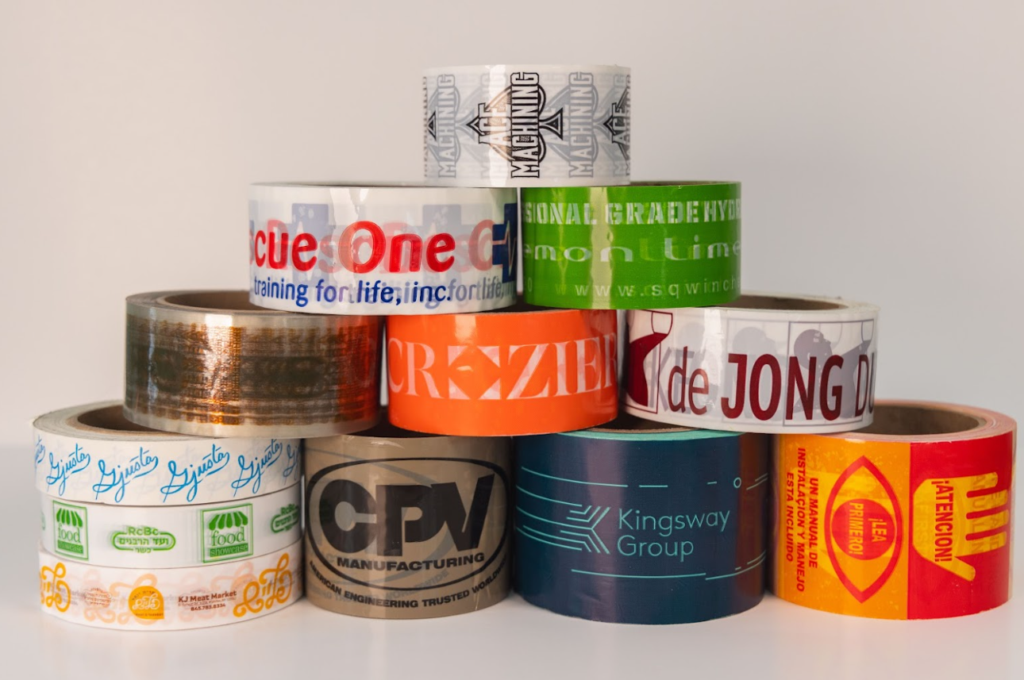
Custom printed tape adds branding to standard packing tape, turning functional packaging into marketing while maintaining the same sealing performance.
What Is Duct Tape?
Duct tape is a strong, multi-purpose adhesive tape with three-layer construction: fabric backing, rubber-based adhesive, and water-resistant coating. This design creates a flexible, conformable tape that sticks to varied surfaces and handles rough conditions.
The fabric backing, usually cotton or synthetic mesh, gives duct tape its characteristic strength. This fabric layer prevents the tape from tearing in straight lines and provides the reinforcement needed for bundling heavy items or patching holes. You can pull duct tape hard without it snapping.
Rubber-based adhesive is thick and tacky, designed to grab onto rough, uneven, or slightly dirty surfaces. This adhesive works on metal, wood, plastic, fabric, and many other materials. The thick adhesive layer fills small gaps and irregularities, creating contact even on imperfect surfaces.
The top coating provides water resistance and protects the fabric from damage. While not completely waterproof, duct tape handles moisture better than many other tapes, making it useful for outdoor repairs and temporary weatherproofing.
Duct tape tears easily by hand along the fabric weave, making it convenient for quick fixes without tools. This hand-tearability is a major advantage when you need emergency repairs or don’t have scissors nearby.
Despite its name, duct tape isn’t ideal for actual HVAC ducts. The rubber adhesive degrades quickly in the heat of ductwork. The name comes from its original WWII use sealing ammunition boxes, when it was called “duck tape” after the cotton duck fabric used in its construction.
Key Differences Explained
Understanding why these tapes perform differently helps you choose the right one for each job.
Adhesive Type
Packing tape: Acrylic or hot melt adhesive formulated to bond with cardboard’s porous surface. The adhesive flows into paper fibers, creating a mechanical bond that strengthens over time.
Duct tape: Thick rubber-based adhesive designed for instant grab on non-porous surfaces. Sits on top of surfaces rather than bonding into them. Works by contact and pressure.
Material Construction
Packing tape: Plastic film backing that’s smooth, uniform, and designed for flat surfaces. Provides tensile strength but little flexibility. Won’t conform to curves without creasing.
Duct tape: Fabric backing with woven cloth that provides both strength and flexibility. Bends and stretches to conform to irregular shapes while maintaining integrity.
Strength Characteristics
Packing tape: High tensile strength resists pulling forces lengthwise. Takes significant force to pull apart. Can stretch slightly to absorb impacts without breaking.
Duct tape: High tear resistance from fabric backing. Won’t rip under stress from multiple directions. Can be pulled hard without tearing.
Flexibility
Packing tape: Relatively rigid. Lays flat on cardboard and resists bending. Perfect for sealing box flaps but useless for wrapping irregular objects.
Duct tape: Highly flexible and conformable. Wraps around corners, follows curves, sticks to uneven surfaces without creasing or lifting.
Temperature Performance
Packing tape: Maintains bond across wide temperature range. Handles delivery truck heat and cold storage facilities. Adhesive doesn’t soften in heat or become brittle in cold.
Duct tape: Rubber adhesive struggles with temperature extremes. Heat softens it, causing loss of grip. Cold makes it brittle and reduces tackiness.
Application Method
Packing tape: Requires dispenser for clean, efficient application. Results in professional-looking seals and consistent performance. Difficult to apply cleanly by hand.
Duct tape: Tears by hand along fabric weave. Fast and convenient for quick fixes. No tools or dispensers needed.
When to Use Packing Tape
Packing tape works best for specific applications where its design advantages matter most.
Sealing Shipping Boxes
Packing tape’s primary purpose is sealing cardboard boxes for shipping. The adhesive bonds directly to cardboard fibers, creating a seal that holds when boxes get dropped, stacked, and jostled during transit.
Shipping carriers like USPS, UPS, and FedEx specifically recommend packing tape for sealing boxes. Some carriers explicitly discourage duct tape because its adhesive fails during temperature changes in trucks and cargo holds.
Moving and Storage
Packing tape holds through the stress of moving, boxes stacked in trucks, carried up stairs, and set down hard. The clean application makes boxes look neater and easier to label.
For long-term storage, acrylic-based packing tape maintains its bond for months or years through temperature swings and humidity changes in attics, garages, or storage units.
Package Security
Clear packing tape shows tampering attempts. If someone tries to open a sealed box, the tape tears or shows obvious signs of removal and reapplication.
Security packing tape with special patterns or fibers makes tampering even more obvious for valuable shipments.
Professional Shipping Operations
Packing tape costs less per foot than duct tape and comes in large rolls that last longer. Dispenser application speeds up packaging operations.
Custom printed packing tape adds branding to every package while maintaining proper sealing performance, turning functional packaging into marketing.
When to Use Duct Tape
Duct tape excels in situations requiring flexibility, multi-surface adhesion, and quick application.
Temporary Repairs
Duct tape’s reputation as a universal fix-it solution is well-earned. A torn backpack strap, cracked plastic item, or broken tool handle can all get a quick duct tape fix that holds until you can make proper repairs.
The thick rubber adhesive grabs surfaces that packing tape won’t stick to. The fabric backing provides strength that thin plastic film can’t match. The flexibility lets you wrap repairs tightly even on irregular shapes.
Bundling Items
Duct tape’s tear resistance makes it excellent for bundling. Wrap it around extension cords, bundle garden hoses or cables, secure loose pipes or lumber for transport. The fabric backing won’t tear when you pull it tight, and the adhesive sticks to itself for easy bundling.
Packing tape tears too easily for bundling. Without fabric reinforcement, it rips apart under the tension needed to hold items securely.
Patching and Weatherproofing
Duct tape’s water resistance and conformability make it useful for temporary patches. Small tears in tarps, leaks in hoses, or gaps needing quick sealing all work temporarily with duct tape until you get proper materials.
The flexible fabric backing conforms to irregular surfaces and maintains contact even when the surface flexes. The water-resistant coating provides some moisture protection, though duct tape isn’t completely waterproof.
Crafts and DIY Projects
Duct tape’s availability in various colors and patterns, combined with its strength and hand-tearability, makes it popular for crafts. The fabric backing gives crafted items structure while the strong adhesive holds everything together.
The flexibility lets you fold, shape, and manipulate duct tape in ways rigid packing tape can’t accommodate.
When Each Tape Fails
Using the wrong tape for a job leads to predictable failures. Understanding why helps you avoid these mistakes.
Why Duct Tape Fails on Boxes
Duct tape seems like it should work on boxes because it’s strong and sticky, but several factors cause it to fail in shipping applications.
Adhesive doesn’t bond to cardboard properly. The thick rubber-based adhesive sits on top of cardboard’s porous surface instead of bonding into the fibers. It relies on surface contact rather than mechanical bond. As the box flexes and the cardboard fibers move, the adhesive loses contact and the seal weakens.
Heat degrades the rubber adhesive. Delivery trucks, cargo holds, and storage facilities can reach high temperatures. The rubber adhesive softens in heat, losing its tackiness and allowing the tape to peel off. This is why shipping carriers specifically discourage duct tape, it fails during normal shipping conditions.
Cold makes the adhesive brittle. In cold temperatures, rubber adhesive becomes stiff and loses flexibility. It can crack or lose adhesion entirely. Boxes shipped or stored in cold conditions are likely to pop open if sealed with duct tape.
Leaves messy residue. When duct tape finally does come off cardboard, it often tears away the top layer of cardboard and always leaves sticky, gummy residue. This residue is difficult to remove and can damage items packed inside the box. Clean removal is nearly impossible.
Costs more per foot. Duct tape is significantly more expensive than packing tape. Using it to seal boxes wastes money on a product that performs worse for that specific application. You’re paying more for inferior results.
Shipping carriers discourage it. USPS, UPS, FedEx, and other carriers specifically advise against using duct tape on shipping boxes. While not technically prohibited, using it increases the risk of your package failing during transit and being refused or delayed.
Why Packing Tape Fails for Repairs
Packing tape’s specialized design for cardboard makes it unsuitable for most repair applications.
Too rigid for curved surfaces. Packing tape won’t conform to irregular shapes. It creases, wrinkles, or pops off when you try to wrap it around pipes, handles, or curved items. The plastic film backing has no flexibility and fights any attempt to bend it.
Tears easily without fabric backing. Packing tape has high tensile strength but tears easily if you start a cut or create stress from an angle. Without fabric reinforcement, it can’t handle the multidirectional forces common in repair situations. It will rip apart immediately under stress.
Adhesive only works on cardboard. The acrylic or hot melt adhesive is formulated for bonding to porous cardboard. It doesn’t stick well to metal, wood, plastic, fabric, or most other surfaces you’d need to repair. The thin adhesive layer doesn’t fill gaps or grab rough surfaces.
Not strong enough for bundling. While packing tape won’t pull apart lengthwise easily, it tears too easily from the side to bundle items together. The moment you pull it tight to secure a bundle, it’s likely to rip. The lack of tear resistance makes it useless for creating straps or ties.
Can’t be hand-torn. Packing tape requires scissors or a dispenser to cut. In repair situations where you need quick fixes, stopping to find cutting tools defeats the purpose. The smooth plastic backing won’t tear by hand along any direction.
Not water resistant. While some packing tapes have water-resistant backing, the adhesive itself isn’t designed for moisture exposure. It won’t create weatherproof seals or hold up when wet like duct tape’s water-resistant construction.
Frequently Asked Questions
Can I use duct tape instead of packing tape for shipping?
No, duct tape is not recommended for shipping boxes. Shipping carriers explicitly discourage duct tape because its rubber-based adhesive fails during temperature changes in delivery vehicles. The adhesive softens in heat and becomes brittle in cold, causing boxes to pop open during transit. Packing tape is designed specifically for cardboard and maintains its bond through temperature extremes, making it the only reliable choice for shipping.
Will packing tape work for repairs?
Packing tape fails at most repairs because it’s too rigid to conform to irregular shapes, tears easily under multidirectional stress, and only bonds well to cardboard. Its thin adhesive won’t grab metal, wood, plastic, or other surfaces you’d typically need to repair. Packing tape can’t be hand-torn, making it impractical for quick fixes. Use duct tape for repair applications.
Which tape is stronger?
Duct tape and packing tape have different types of strength. Packing tape has higher tensile strength, it resists breaking when pulled lengthwise. Duct tape has higher tear resistance due to its fabric backing, preventing it from ripping under stress from multiple directions. For sealing boxes under stacking pressure, packing tape is stronger. For bundling and repairs requiring multidirectional strength, duct tape is stronger.
Which tape is cheaper?
Packing tape costs significantly less, approximately $0.02 to $0.05 per foot compared to duct tape’s $0.08 to $0.15 per foot. For shipping and sealing applications, packing tape provides better performance at lower cost. Only use more expensive duct tape when you need its specific properties like flexibility, multi-surface adhesion, or tear resistance.
Can duct tape seal cardboard boxes?
Duct tape can physically seal cardboard boxes but shouldn’t be used for this purpose. The rubber adhesive doesn’t bond properly to cardboard’s porous surface and fails when exposed to temperature changes during shipping or storage. It costs more than packing tape while performing worse. Shipping carriers discourage duct tape on boxes because of these reliability issues.
Why do shipping companies discourage duct tape?
Shipping carriers discourage duct tape because its rubber-based adhesive degrades in the temperature extremes common during shipping. Delivery truck interiors can exceed 120°F in summer, softening the adhesive. Cold storage and winter conditions make it brittle. These temperature swings cause duct tape to lose adhesion and boxes to pop open, creating damaged shipments and customer complaints. Packing tape remains stable across all shipping temperatures.
What’s the best tape for moving boxes?
Packing tape is the best choice for moving boxes. It bonds strongly to cardboard, handles the stress of stacking and carrying, and maintains its seal through temperature changes during transport and storage. Heavy-duty packing tape at 2.5 mil thickness or greater works best for boxes containing heavy items like books or dishes. Avoid duct tape for moving boxes as it costs more and performs worse.
Can you mail packages with duct tape?
Technically yes, but it’s strongly discouraged. USPS, UPS, and FedEx all recommend against using duct tape on mailed packages because of adhesive failure during transit. While carriers won’t refuse packages sealed with duct tape, you risk the box opening during shipping and contents being damaged or lost. Always use proper packing tape for mailed packages to ensure they arrive sealed.
Conclusion
Packing tape and duct tape serve different purposes based on their design. Packing tape’s acrylic or hot melt adhesive bonds to cardboard fibers and maintains seals through temperature changes, making it the right choice for shipping, moving, and storage. Duct tape’s flexible fabric backing and rubber adhesive stick to varied surfaces and conform to irregular shapes, making it ideal for repairs, bundling, and quick fixes.
Using the wrong tape wastes money and causes failures. Duct tape costs more than packing tape while performing worse on boxes. Packing tape can’t handle the flexibility and multi-surface adhesion needed for repairs. Match the tape to the job and you’ll get reliable results.
At Plus Packaging, we supply packing tape designed specifically for sealing boxes. Our custom printed tape adds your branding while maintaining the strong cardboard bond needed for shipping. For nearly 50 years, we’ve helped businesses choose the right packaging materials for their needs. Contact us to discuss your packing tape requirements.