

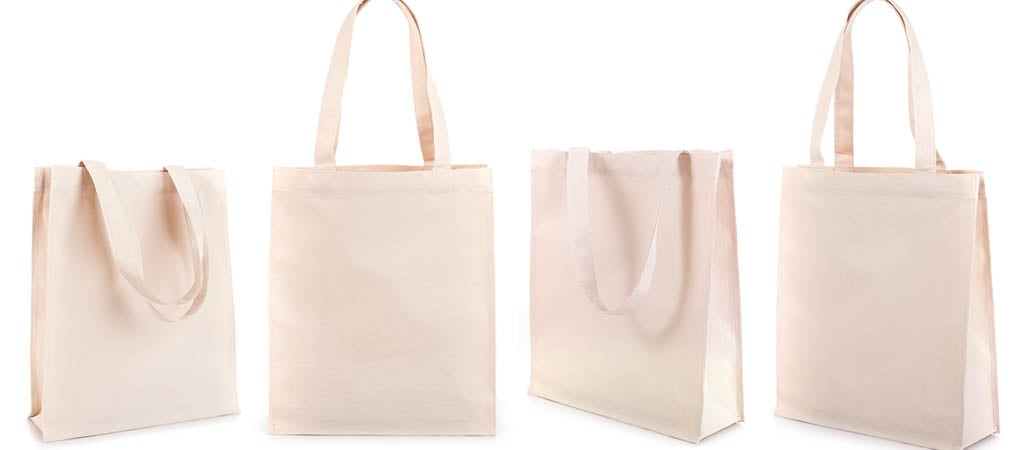
Pick up a non-woven tote bag and it feels like cloth, soft, a little textured, nothing like plastic. But it isn’t woven from thread the way canvas or cotton is. It’s actually a form of plastic engineered to behave like fabric, and understanding that difference matters if you’re choosing totes for your business or just curious what you’re carrying home from the store.
Here’s what non-woven totes are really made of, how they’re manufactured, and how they stack up against the other bag materials you’ll run into.

The Short Answer: Polypropylene
Most non-woven tote bags are made from polypropylene, a thermoplastic polymer that also shows up in food containers, textiles, and automotive parts. Instead of being spun into thread and woven on a loom the way cotton or jute is, the polypropylene is melted down and extruded into a web of continuous fibers, then bonded together using heat, pressure, or chemical treatment. The result is a flat, fabric-like sheet that gets cut and sewn into bags the same way you’d work with cloth.
Some non-woven totes use polyester instead of polypropylene, and a smaller share blend in nylon, but polypropylene is by far the dominant material because it’s cheap to produce, lightweight, and holds up reasonably well to repeated use.
How Non-Woven Fabric Is Actually Made
The process is called melt spinning, and it’s simpler than most textile manufacturing. Small polypropylene pellets get fed into a hopper and heated until they melt into a liquid polymer. That melted plastic is then forced through tiny nozzles, extruding it into continuous fine fibers. Those fibers get laid down in a random, overlapping web rather than being spun into individual threads first.
From there, the web is bonded into a solid sheet through one of a few methods:
- Thermal bonding, where heat and pressure fuse the fibers together at their contact points.
- Chemical bonding, where an adhesive binds the fibers.
- Mechanical bonding, where the fibers are physically interlocked, often through needle-punching.
No weaving, no thread, no loom. That’s the whole reason it’s called “non-woven,” the fibers are bonded directly rather than woven over and under each other. It’s the same basic manufacturing family used to make things like dryer sheets, surgical masks, and diaper linings, just calibrated differently for bag-weight material.
Non-Woven vs. Woven Polypropylene: Not the Same Thing
It’s easy to lump these together since both start with the same base plastic, but they end up as genuinely different products. Woven polypropylene bags are made by weaving strands of the plastic together like traditional fabric, which produces a visible grid pattern and a heavier, more structured feel. Because of that construction, woven PP totes tend to hold their shape better and read as more premium, often finished with a laminated coating for vibrant printing and moisture resistance.
Non-woven polypropylene skips the weaving step entirely, bonding the fibers with heat and pressure instead. That gives you a softer, more fabric-like material that’s lighter and cheaper to produce, which is exactly why non-woven totes dominate trade show giveaways, conference swag, and large-scale promotional campaigns where volume matters more than a premium feel. If your goal is a bag that reads as retail merchandise rather than a giveaway, premium retail bags or a heavier woven construction will typically outperform standard non-woven material.
Is Non-Woven Polypropylene Actually Eco-Friendly?
This is the question that trips people up, since “non-woven” bags are marketed as the reusable, eco-friendly alternative to single-use plastic, but the material itself is still plastic. Here’s the honest breakdown:
- They’re reusable, which is the main sustainability win. A single non-woven tote replacing hundreds of single-use plastic bags over its lifespan is a real net reduction in plastic waste, even though the tote itself is made of plastic.
- They’re recyclable, typically as a type 5 plastic, though acceptance varies by local recycling program. Not every curbside program takes them, so it’s worth checking locally rather than assuming.
- They’re not compostable or biodegradable in any meaningful timeframe. Polypropylene is a petroleum-derived plastic, and it behaves like one at end of life.
If biodegradability specifically matters to your brand, non-woven polypropylene isn’t the material that delivers it, natural fiber totes or a certified compostable format will get you there instead. For shipping and mailing applications rather than reusable retail bags, our compostable mailers are built and certified specifically for that end-of-life outcome.
Durability: What Non-Woven Totes Can Actually Handle
Non-woven polypropylene isn’t as strong as woven cloth, but it’s sturdy enough for most everyday use, groceries, retail purchases, light event swag. It’s water-repellent and tear-resistant for its weight class, and most non-woven totes can be wiped clean or machine-washed in cold water and drip-dried, which is more than you can say for a lot of paper alternatives.
Where it falls short is heavier, repeated loads. If you’re packing totes with anything bulky or sharp-edged on a regular basis, or you want a bag that visually reads as a durable, long-term product rather than a giveaway, a heavier woven PP or cotton canvas construction will last longer under that kind of stress.
Where Non-Woven Totes Make the Most Sense
Given the tradeoffs, non-woven polypropylene tends to be the right call when:
- You’re distributing bags at volume, trade shows, conferences, retail giveaways, where cost per unit matters more than long-term structure.
- You want a lightweight bag that’s cheap to ship and easy to store flat until it’s needed.
- Full-color or screen-printed branding is the priority, and non-woven material takes printing well at a lower cost than premium woven or laminated options.
For a bag meant to feel like a retail product customers keep for years, or a brand actively marketing plastic-free credentials, it’s worth looking at paper retail bags or a natural fiber tote instead. For businesses weighing plastic retail packaging more broadly, our plastic retail bags line covers the harder-wearing, non-tote end of that same material family.
Frequently Asked Questions
Is a non-woven tote bag the same as a plastic bag? Not quite, though they’re made from the same base material in many cases. Non-woven totes are engineered to be reusable and more durable than a single-use plastic bag, and they’re bonded into a fabric-like sheet rather than a thin film. The plastic itself, polypropylene, is often the same family of material used in thinner single-use bags.
Can non-woven tote bags be recycled? Most are made from a type 5 recyclable plastic, but acceptance depends on your local recycling program. Some municipal programs don’t accept type 5 plastics curbside, so it’s worth checking before assuming a bag will be recycled just because the material technically can be.
Are non-woven tote bags machine washable? Many are. They can typically be wiped clean, and some are safe to machine wash in cold water as long as they’re drip-dried afterward rather than put in a dryer, which can warp the bonded fibers.
What’s the difference between non-woven and spunbond polypropylene? Spunbond is actually a specific type of non-woven manufacturing process, one of the more common methods used for tote-weight material. In practice, “non-woven” and “spunbond” are often used interchangeably when people are talking about tote bags.
The Bottom Line
Non-woven tote bags are made from polypropylene fibers that are melted, extruded, and bonded into a fabric-like sheet, not woven from thread the way cotton or jute is. That construction makes them lightweight, affordable, and reusable, a real improvement over single-use plastic, even though the material itself isn’t biodegradable. If cost and print quality at volume matter most, non-woven is usually the right call. If durability, a premium feel, or genuine biodegradability matter more, cotton canvas, jute, or woven polypropylene are worth the extra cost.