

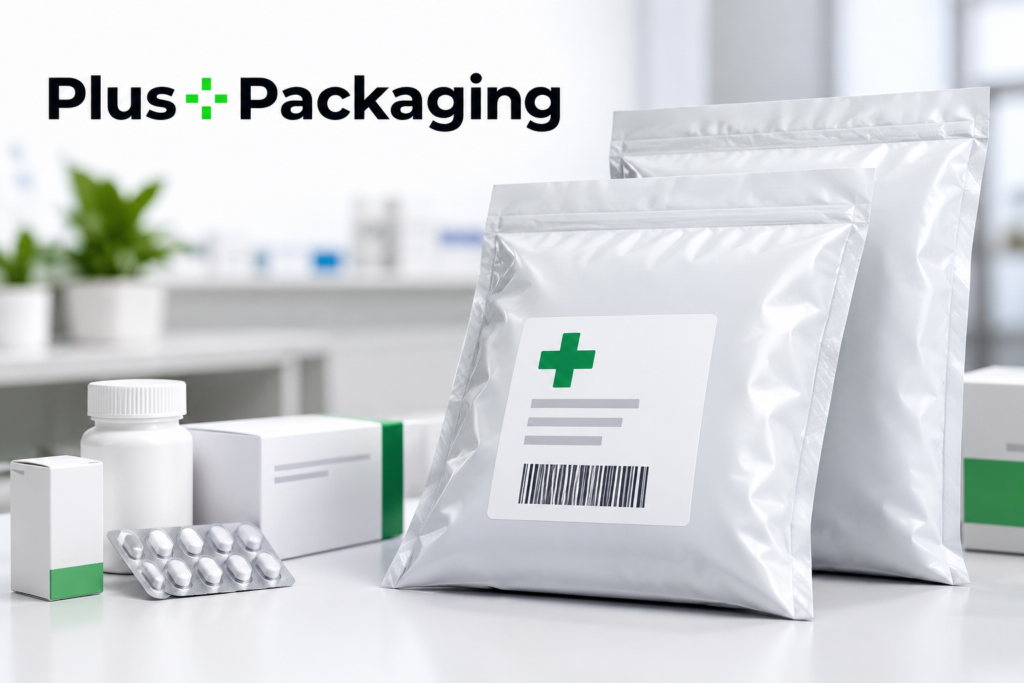
Pharmaceutical packaging is everything that contains, protects, identifies, and delivers a medicine, from the blister pack around a single tablet to the mailer that brings a prescription to a patient’s door. It has to keep the drug stable, keep it safe from tampering and contamination, carry accurate information, and meet strict regulatory rules, all while surviving transport and storage.
This guide covers what pharmaceutical packaging is, the three packaging levels, common types and materials, the rules that shape it, sustainability trends, and how to choose shipping packaging for direct-to-patient orders.
What Is Pharmaceutical Packaging?
Pharmaceutical packaging is the system of containers, closures, labels, and outer packs used to hold and distribute medicines. Unlike packaging for most consumer goods, it has a safety job as well as a marketing one. A poorly chosen material can let in moisture or light, react with the drug, or fail to show that someone opened the pack.
The main functions are:
- Protection from moisture, oxygen, light, heat, and physical damage
- Containment of the product without leaking or reacting with it
- Information such as dosage, ingredients, lot number, and expiry date
- Security through tamper evidence, child-resistant closures, and anti-counterfeiting features
- Compliance with the labeling and quality rules of each market
The Three Levels of Pharmaceutical Packaging
| Level | What it is | Examples | Main job |
|---|---|---|---|
| Primary | Touches the medicine directly | Blister packs, bottles, vials, ampoules, sachets, syringes | Protect and contain the drug |
| Secondary | Holds one or more primary packs | Cartons, boxes, leaflets | Carry labeling and group products |
| Tertiary | Moves goods through the supply chain | Shipping cartons, pallets, patient mailers | Protect during transport and storage |
Most of the regulation focuses on primary and secondary packaging. The tertiary level, which includes patient shipping packaging, is where businesses have the most freedom to choose materials, and where mailer selection matters.
Common Types of Pharmaceutical Packaging
- Blister packs. Individual cavities sealed with foil, widely used for tablets and capsules. They protect each dose until it’s used and make it easy to track adherence.
- Bottles and jars. Glass or plastic containers with child-resistant or tamper-evident closures, used for tablets, capsules, and liquids.
- Vials and ampoules. Usually glass, used for injectables and sterile liquids.
- Prefilled syringes and cartridges. Used for injectable drugs and some biologics.
- Sachets and pouches. Single-dose packs for powders, granules, and topical products.
- Tubes. Aluminum or plastic tubes for creams, gels, and ointments.
- Cartons and leaflets. The secondary packs that carry required information.
Materials Used in Pharmaceutical Packaging
| Material | Typical uses | Strengths | Limits |
|---|---|---|---|
| Glass | Vials, ampoules, bottles, syringes | Inert, transparent, strong barrier, easy to sterilize | Heavy and breakable |
| Plastics (such as PET, HDPE, PVC, polypropylene) | Bottles, blisters, closures, pouches | Light, durable, cost effective | Can interact with some drugs, weaker barrier than glass or foil |
| Aluminum foil | Blister lidding, sachets, tubes | Excellent barrier against moisture, oxygen, and light | Not transparent |
| Paper and paperboard | Cartons, leaflets, outer packs | Printable, recyclable, low cost | No barrier on its own |
| Desiccants and liners | Inside bottles and pouches | Control internal moisture | Added component, not a container |
Material choice depends on the drug’s sensitivity, shelf life, dose form, and how the product will be stored and shipped. Sensitive drugs generally need higher barrier protection.
Regulations That Shape Pharmaceutical Packaging
Details vary by country and product, so treat this as an overview and confirm requirements with a regulatory professional.
- Good Manufacturing Practice. Packaging materials and processes must protect the product’s identity, strength, quality, and purity.
- Labeling. Prescription and over-the-counter products must carry required information that stays legible through handling.
- Child-resistant packaging. In the United States, the Poison Prevention Packaging Act requires child-resistant closures on many oral prescription drugs and other hazardous household substances.
- Tamper evidence. Many over-the-counter products need packaging that shows if it has been opened.
- Serialization and traceability. The US Drug Supply Chain Security Act and the EU Falsified Medicines Directive require unique identifiers or traceability steps to fight counterfeit drugs.
- Privacy. Patient information on shipping labels falls under health privacy rules, so outer packaging shouldn’t reveal what’s inside.
Sustainability in Pharmaceutical Packaging
Sustainability is moving up the agenda, but pharma has a constraint most industries don’t: the drug always comes first. Recyclable or lighter materials can only be used where they still protect the product.
The easiest gains are often at the secondary and shipping levels, where there is more design freedom. Replacing oversized plastic outer packaging with right-sized recyclable or compostable options, cutting unnecessary layers, and choosing paper-based cushioning are all realistic steps. Packaging laws such as extended producer responsibility programs are also pushing companies to count the cost of the materials they use.
Shipping Pharmaceuticals Directly to Patients
Mail-order pharmacies, telehealth services, and direct-to-patient programs have made shipping packaging a bigger part of the picture. A good patient mailer should be opaque so contents aren’t visible, sealed securely, resistant to tearing and moisture, and cushioned enough to protect glass or fragile items.
One important limit: standard mailers do not control temperature. Medications that need refrigeration or heat protection need validated insulated cold chain packaging, which is a separate category. Controlled substances also carry additional shipping rules, so confirm what applies before you ship.
Choosing the right mailer
- Prescription bottles and boxed medication: Bubble Mailers provide shock absorption so bottles don’t crack or loosen in transit. Choose a size that holds the item snugly so it doesn’t shift.
- Blister packs, supplements, and multi-item orders: Custom Poly Mailers are waterproof, tear-resistant, and lightweight, and an opaque poly mailer keeps patient orders private. They also take printing well, which helps pharmacies and health brands look consistent. For heavier bottles, use an inner wrap or step up to a bubble mailer.
- Leaflets, forms, and flat paperwork: Paper Mailers handle flat, light items well, either on their own or as a sleeve around a rigid inner pack.
- Supplements and over-the-counter products for eco-minded brands: Paper Padded Mailers give cushioning without a plastic bubble lining.
- Light, low-risk items with a sustainability message: Compostable Mailers offer a plant-based option. If you use the word “compostable” in your marketing, confirm certification with your supplier, since regulators are tightening how that term is used.
Packing Best Practices for Medication Shipments
- Keep the outside discreet. Don’t print drug names or conditions on the mailer.
- Seal completely. A fully sealed mailer protects privacy and makes tampering easier to spot.
- Protect the label. Make sure the shipping label stays legible in damp conditions.
- Control movement. Size the mailer to the product so vials and bottles don’t shift.
- Know what needs cold chain. Don’t send temperature-sensitive medication in a standard mailer.
- Include clear instructions. A printed insert with storage and handling guidance cuts down on patient calls.
- Keep supplier documentation. Record material specs and compliance information in case of an audit or complaint.
Frequently Asked Questions
What are the three types of pharmaceutical packaging? Primary packaging touches the drug directly, secondary packaging holds primary packs and carries information, and tertiary packaging moves products through the supply chain.
What is the most common material in pharmaceutical packaging? Glass and plastics dominate primary packaging, with aluminum foil used for blister lidding and paperboard for cartons. The right choice depends on how sensitive the drug is.
What is tamper-evident packaging? It is packaging with a feature, such as a seal, band, or tear strip, that clearly shows if the pack has been opened.
Can you ship medication in a regular mailer? Non-temperature-sensitive, non-controlled medication from a licensed sender can generally ship in a secure, well-sealed mailer such as a bubble mailer or poly mailer. Temperature-sensitive and controlled drugs need specialist packaging and may need extra documentation.
How does sustainability affect pharmaceutical packaging? It drives right-sizing, lighter materials, and recyclable or compostable options for outer packaging, while the primary pack stays focused on protecting the drug.
Final Thoughts
Pharmaceutical packaging works as a system: the primary pack protects the medicine, the secondary pack carries the information, and the shipping packaging gets it safely and privately to the patient. At the shipping level, the choice is straightforward once you match the format to the product, with a bubble mailer for bottles, a custom poly mailer for discreet lightweight orders, a paper mailer for paperwork, and a paper padded mailer or compostable mailer for brands that put sustainability first.
This article is general information, not regulatory or legal advice. Confirm requirements for your products and markets with a qualified professional.