

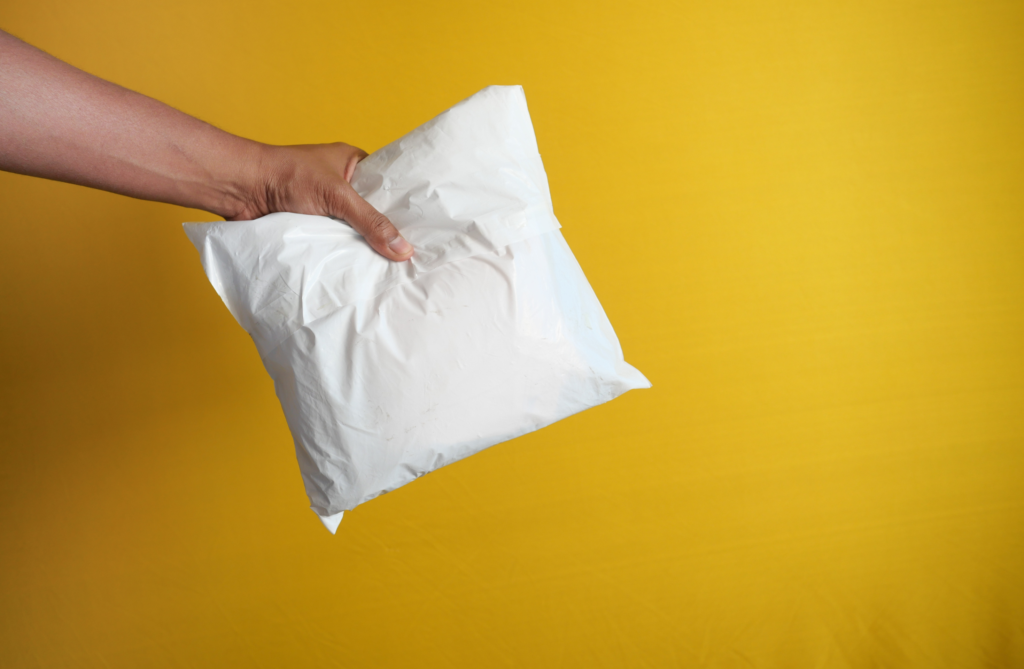
One of the most common questions we hear from brands setting up their shipping strategy is simple on the surface: should I ship in paper mailers or poly mailers? Once you dig in, the answer depends on what you’re shipping, how much you’re willing to spend, and which sustainability metric matters most to your business. As with most packaging decisions, there’s no single right answer, only the right answer for your product.
Quick Summary
The case for paper mailers: Paper is the more circular material. Paper Mailers can be made with high recycled content, go straight into standard curbside recycling, and biodegrade naturally if they ever end up as litter. If you need extra cushioning, Paper Padded Mailers offer the same recyclability without introducing a plastic bubble lining into the mix.
The case for poly mailers: Custom Poly Mailers made from recycled film typically have a lower carbon footprint per unit than paper, largely because they’re lighter to ship and cheaper to produce. They’re also more water resistant, more flexible, and more puncture resistant, which matters for products that need to survive rougher handling in transit.
Bottom line: if a paper mailer works functionally for your product and the price point fits your margins, it’s the stronger sustainability choice on a circularity basis. If paper doesn’t hold up for what you’re shipping, a recycled poly mailer is still a responsible, defensible choice, not a compromise.
A Deeper Dive
Circularity
Circularity means keeping materials in use for as long as possible instead of extracting new raw material every time a product ships. Looked at through that lens, paper generally wins.
Paper mailers can be produced with a high percentage of recycled content, and paper as a category has one of the strongest recycling rates of any packaging material, largely because curbside recycling programs almost universally accept it. There’s no special drop-off required and no confusion for the customer about where it goes. Paper Mailers and Paper Padded Mailers both fit cleanly into this loop.
Poly mailers can also be made from recycled content, and Custom Poly Mailers built from recycled film keep plastic that already exists in circulation instead of pulling from virgin material. The catch is that plastic film needs store drop-off recycling rather than curbside pickup, which adds a step most customers won’t take unless the mailer is labeled clearly.
Reusability
This is one area where poly mailers have an edge. Because plastic film holds up to being opened and resealed, poly mailers with a second seal strip can be reused for a return shipment or a second order without losing their structural integrity. Paper mailers are more prone to tearing once opened, which makes them harder to reuse a second time, though they remain excellent single-use, fully recyclable options.
Natural Biodegradability
Paper is naturally biodegradable and breaks down in a natural outdoor environment within a matter of weeks to a couple of months. If a paper mailer somehow ends up as litter, an outcome nobody wants but one that happens, it won’t sit in the environment for decades.
Standard plastic doesn’t share that property. A conventional poly mailer that ends up as litter can persist in the environment for a very long time, breaking down slowly into smaller fragments rather than disappearing. This is exactly why choosing recycled content and clear disposal labeling matters so much for any brand still using poly mailers, and it’s also why some brands prefer to skip plastic altogether. If your brand has made that commitment, paper is the more consistent fit, and Paper Mailers or Paper Padded Mailers let you do that without sacrificing recyclability.
One note of caution here: biodegradable or “eco” plastic additives that claim to make poly mailers break down faster in a landfill are largely unproven and, in many cases, do more harm than good by fragmenting into microplastics. If avoiding plastic pollution is the goal, look at genuinely compostable materials instead, such as our Compostable Mailers, rather than a standard plastic mailer marketed as degradable.
Carbon Footprint
Weight is the deciding factor here, and it usually tips in plastic’s favor. Poly film is significantly lighter than paper for an equivalent mailer size, which means less material to produce and less fuel burned transporting it, both to your warehouse and on to your customer. For brands that treat carbon footprint as their primary sustainability metric, a recycled poly mailer like our Custom Poly Mailers often comes out ahead of a paper equivalent.
Cost
Paper mailers typically cost more per unit than poly mailers of a comparable size, often by a meaningful margin. They’re also bulkier to store and more expensive to ship in bulk to your own facility, since paper takes up more volume than flexible plastic film for the same order quantity. If you’re shipping high volumes and margins are tight, Custom Poly Mailers are usually the more budget-friendly path without giving up recyclability.
Functionality
Poly mailers are water resistant, flexible, and hold up well to rough handling, which makes them a strong fit for apparel, small hard goods, and anything that needs to survive a bumpy trip through a sorting facility. Custom Bubble Mailers extend that same durability with added cushioning for items that need extra protection.
That said, paper handles a surprising amount of product categories well. Custom Paper Mailers ship apparel, books, cosmetics, and accessories reliably every day, and Paper Padded Mailers add cushioning for items that need a bit more protection without moving to plastic at all. Paper simply isn’t the right call for anything that needs to survive heavy moisture exposure or significant flexing during transit.
Key Takeaways
1. Recyclability: Paper mailers go straight into curbside recycling and biodegrade naturally, giving them the edge for end-of-life outcomes.
2. Carbon footprint: Recycled poly mailers are generally lighter and less carbon-intensive to produce and ship than paper equivalents.
3. Cost: Poly mailers typically cost less per unit and take up less storage space than paper mailers of the same size.
4. Durability: Plastic film offers better water resistance and puncture resistance, useful for a wider range of products and rougher shipping conditions.
5. Circularity: Paper supports a more circular system thanks to strong recycling rates and universal curbside access, while poly mailers depend more on store drop-off programs and clear labeling to close the loop.
Which One Should You Choose?
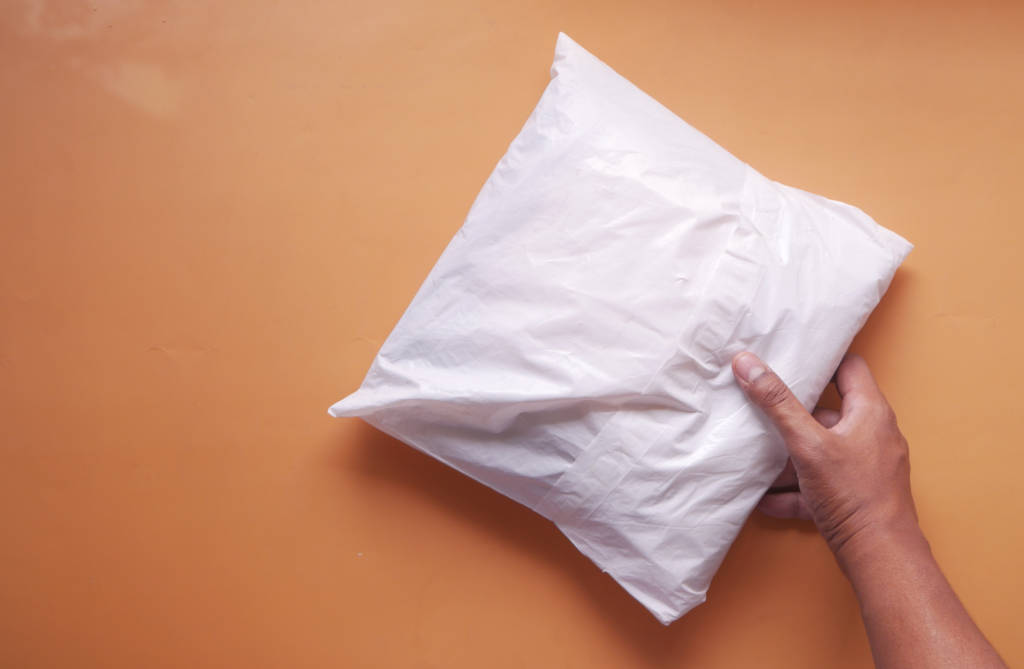
If your product ships fine in a lighter format and your customers can access curbside recycling without a second thought, Custom Paper Mailers or Custom Paper Padded Mailers are the stronger circularity choice and a safe default for most ecommerce brands. If your product needs more flexibility, better moisture protection, or a lower per-unit cost at scale, Custom Poly Mailers made from recycled film are still a responsible, well-reasoned choice, especially when they’re clearly labeled for store drop-off recycling.
Need cushioning either way? Custom Bubble Mailers cover fragile items that need plastic-level protection, while Custom Paper Padded Mailers cover the same need for brands staying paper-first. And if your product category leans toward food, garden, or organic positioning, our Custom Compostable Mailers are worth a look as a third path entirely.
There’s no universally correct answer between paper and poly. There’s only the mailer that fits what you’re shipping, who you’re shipping it to, and what your business can sustain long term.